


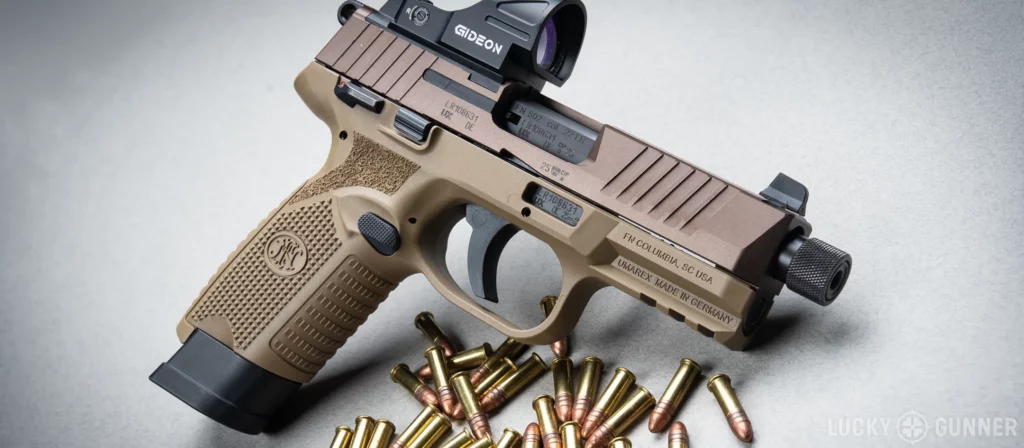
What exactly is a “.22 trainer pistol,” and what makes one different from a regular .22 plinker? In this bonus installment of Project Rimfire, we take a look at the history of trainer pistols and along the way, we’ll sort out the difference between true trainers and guns that only look the part, and talk about what they’re actually good for. The full trainer pistol roundup is coming next, but first, we need to define the category.
Details are in the video below, or keep scrolling for the full transcript.
Hey everybody, I’m Chris Baker from Lucky Gunner and today I’m going to talk about .22 trainer pistols – what that term actually means, where they came from and what they’re for.
What Is a .22 Trainer Pistol?
This is an unplanned bonus installment of Project Rimfire where I am reviewing a ridiculous number of handguns chambered for .22 Long Rifle. The training pistol category is our largest. I’ve been reviewing a few highlights from that category individually. I was planning for the next video to be our big comparison of 10 different trainer pistols. But there’s been a slight change of plans. Before we get to that video, I realized that we really need to define this category a little better. We can’t properly evaluate .22 trainer pistols unless we have an idea of what we expect them to do.
True Trainers vs. Pseudo-Trainers
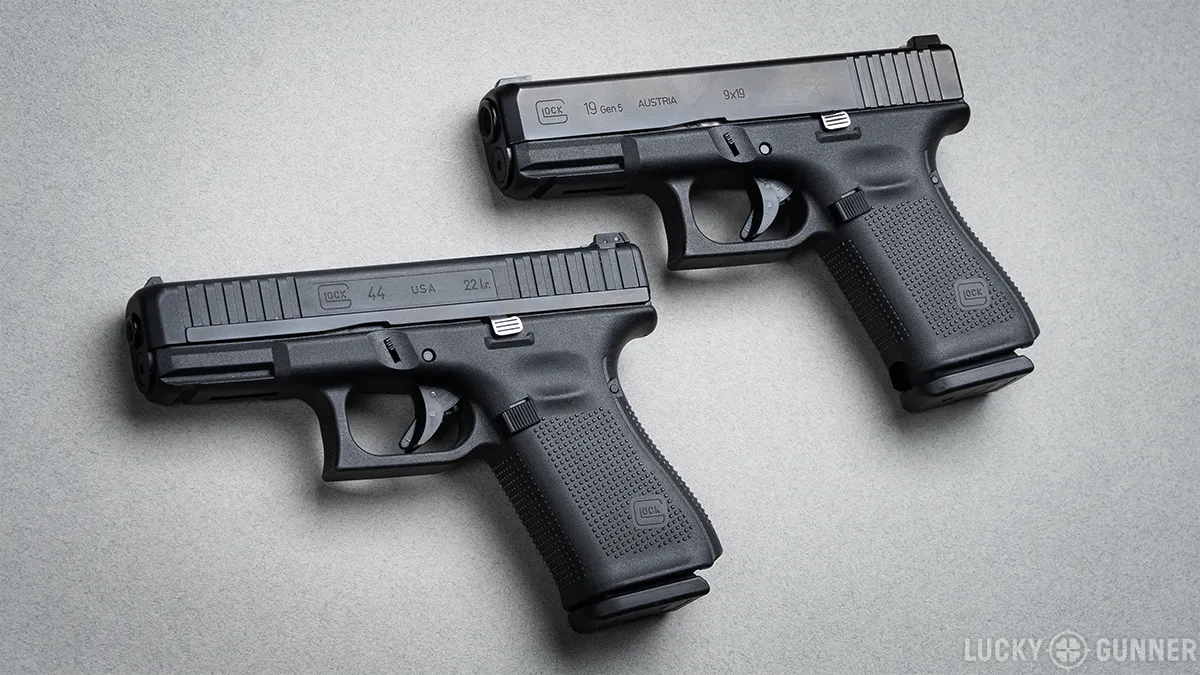
Part of the issue here is that the the term “trainer” or “training pistol” might refer to different things. First, we have what I’m going to call a “true” trainer pistol. That would be a .22 pistol that is functionally identical to a specific centerfire model. For example, this Glock 44 is nearly a perfect stand-in for a Glock 19. It looks and feels exactly like a 19, except it fires .22 and it’s a few ounces lighter.
We can also get a true trainer pistol by using a conversion kit like this one. The frame here is from a standard 9mm Beretta 92FS, but the slide, barrel, and magazine are from the Beretta .22 conversion kit. Same idea as the Glock 44, just a different way to get there.
And there’s the other sub-category of trainer pistols that have the general look and feel of modern defense-style semi-autos but they’re not exact copies of any particular model. For example, the Smith & Wesson M&P 22 Compact has the same styling as the gen 1 M&P pistols. But the size doesn’t quite match up with any of them. It’s smaller than the double stack M&Ps but larger than a Shield. The 22 Compact is kind of its own thing.
For lack of a better term, these are also typically referred to as trainers or training pistols. So now, pretty much any semi-auto .22 that’s not a pocket pistol and not a classic fixed-barrel target pistol gets lumped into the trainer category.
I’m going to call these “pseudo-trainers” because I don’t think most people are actually using them for training. But I’ll come back to that in a minute. First, let’s look at the origin of .22 trainer pistols.
The Origins of the .22 Trainer Pistol
The idea of using small caliber ammo for low cost, low recoil training goes back all the way to the days of muzzle loaders. And by 1907, the US Army had applied the concept to their bolt action service rifles when they began experimenting with a .22 conversion for the 1903 Springfield.
But as far as a purpose-made .22 training analog for a semi-auto pistol, the first mass-produced option in the US was the Colt Ace, introduced in 1931. It was based on the 1911 and sold to the military and as a commercial product. A few years later they came out with an improved version called the Service Model Ace as well as a conversion kit for existing .45 caliber 1911s.
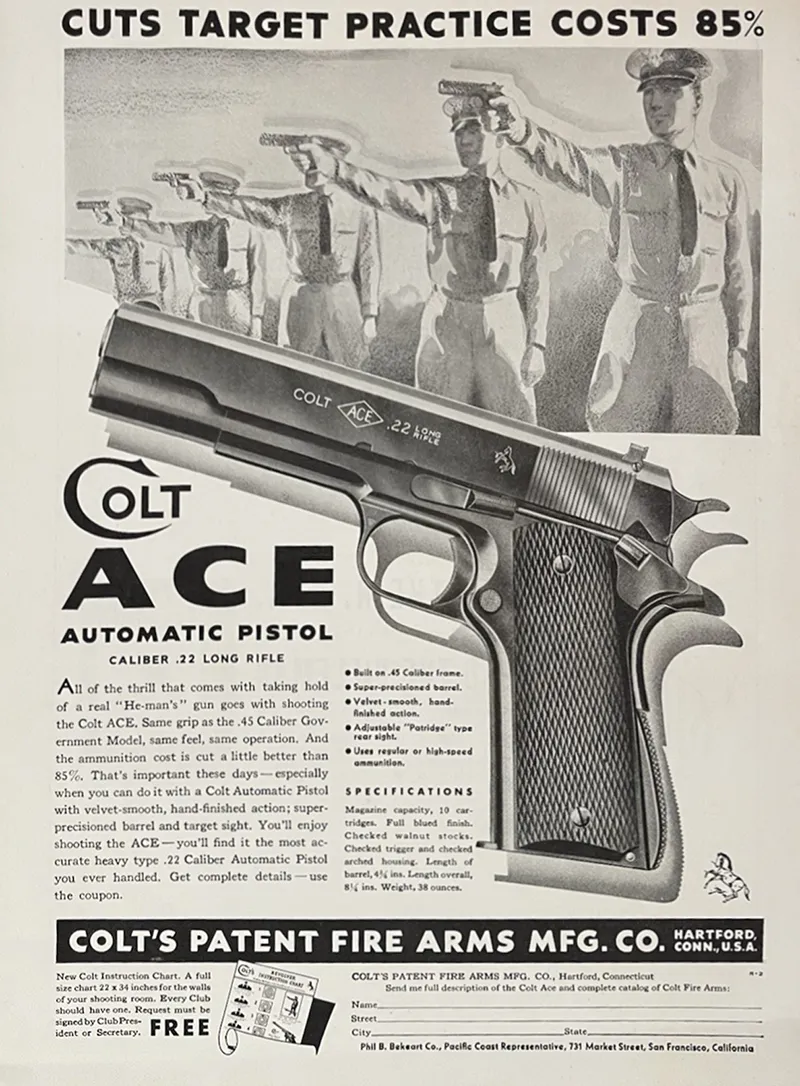
Once WWII hit, all of the Colt Ace production went straight to the military. After the war, Colt sold off what they had left and discontinued the Ace and the conversion kits. The concept was solid. Nobody was denying the benefits of a .22 training pistol. But the Ace was too expensive for what it was, especially for the average hobby shooter. It cost more than the massively popular Colt Woodsman .22 target pistol, which was more accurate and more reliable.
Never Quite Mainstream
Over the years, several companies, including Colt, attempted various .22 conversions of the 1911 – some better than others. In fact, from the 1930s until the 80s, there were very few successful attempts to make .22 training analogs of any semi-auto duty pistol other than the 1911. The .22 trainers that did exist were rare and expensive. That began to change somewhat in the 90s with .22 conversions of popular guns like Glocks and the Beretta 92.
Those are all still around today in one form or another, but the variety of options has only expanded slightly. True .22 conversions don’t often stay on the market for long. For example, the CZ Kadet .22 conversions for the 75-series and P07 were discontinued in 2022. Only a handful of years ago, Sig was making .22 conversions for most of the centerfire pistols in their catalog. All of those are now out of production. The major gun companies have seen far more success with their target .22s and the pseudo trainers than with faithful .22 copies of their centerfire models.
Trainer or Plinker?
So where did the pseudo trainers come from? That’s a more recent concept, but in the mid 20th century, there was a different class of .22s that filled a similar role in the market.
After WWII, European gun makers were cranking out a ton of compact small-caliber blowback operated pistols. They were usually chambered for .32 and .380 ACP, and then sometimes, almost as an afterthought, they would make a .22 version. It’s a whole lot easier to convert a pistol to .22 when it’s already a blowback design versus trying to modify a locked-breech pistol like the 1911. Some common examples were the Beretta Jaguar, the Llama Model XV, and the Walther PP series along with plenty of Walther copies.
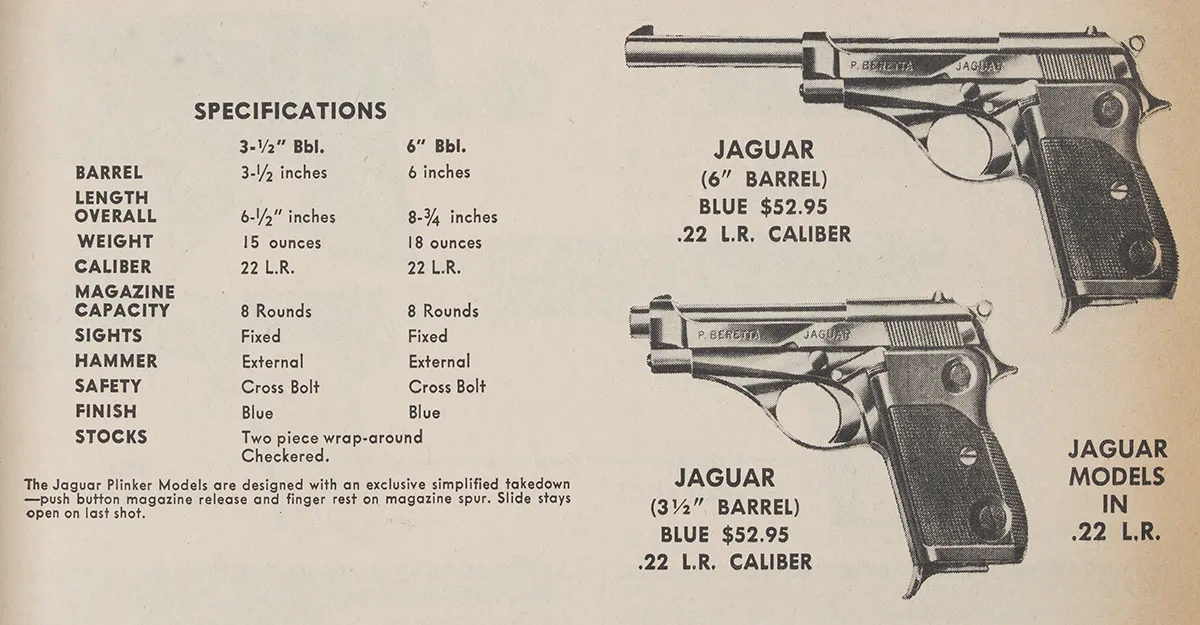
If these guns came out today, we might call them .22 trainers – they are .22 versions of semi-auto defense pistols (although, not duty-sized pistols). But in the US, they were not usually marketed as trainers. The typical suggested uses were for plinking or self-defense along with some longer barrel target models. Some of these were excellent pistols, but there was also a lot of cheap unreliable junk in this category.
Either way, they became less common after the Gun Control Act of 1968 restricted imports. In the following decades, most gun companies began phasing out their small caliber blowback pistols anyway, and the .22 versions went away along with them.
Rise of the Modern Rimfire “Trainer”
The modern iteration of what I’m calling “pseudo-trainers” really started in 2002 when Walther introduced the P22. At first glance, they resembled a .22 version of the P99, which was a 9mm duty gun. But the similarities are superficial. The P22 is much smaller and it’s a hammer-fired design with a slide-mounted manual safety while the P99 is striker-fired with no safety.
I don’t know if Walther expected people to use the P22 as a training analog for the P99, but that’s not what happened. Instead, it became massively popular simply because it was inexpensive, and it was one of the only .22s on the market that didn’t look and feel like a dedicated target pistol.
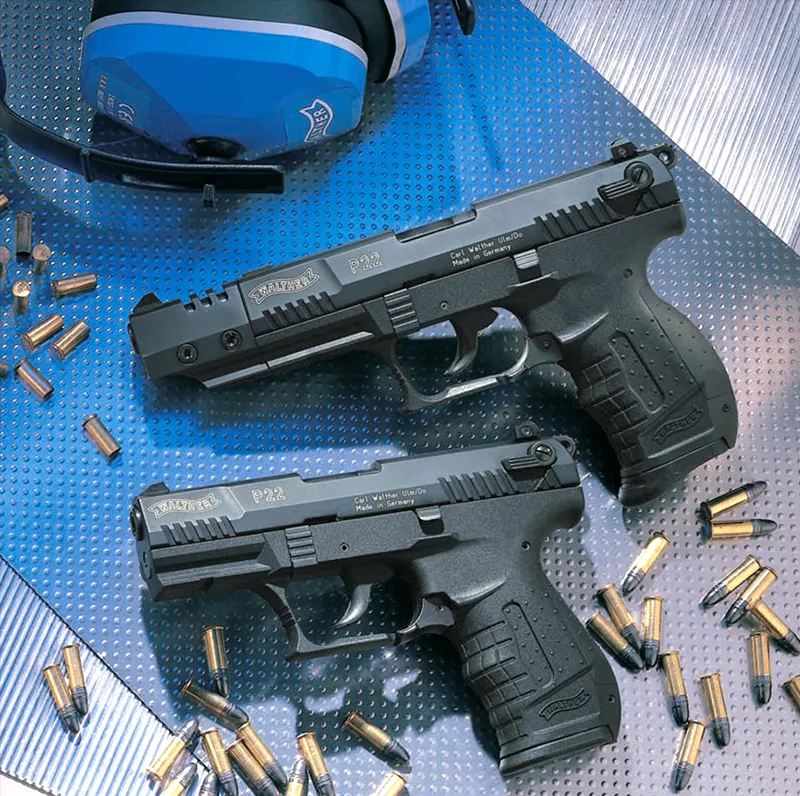
For years, shooters complained about the P22’s lack of reliability and durability. Despite that, the gun kept selling because there was not really any other .22 like it. In the tradition of the old imported .22s of the post-war era, the Walther was what you bought when you just wanted to have cheap fun at the range. If you actually cared about performance or durability, you spent a little more for a Ruger MK series or a Browning Buckmark.
In 2012, Ruger finally came out with the first serious direct competition for the Walther with the SR22. And we’ve gotten a steady release of similar pseudo-trainer style guns ever since. The overall quality has improved and the latest generation includes more features to set them apart from the traditional target pistols. Now, they usually come with higher capacity magazines and optic cuts in the slide like a centerfire pistol. They’re more fun than ever, and my guess is that most people are primarily using them as general purpose plinking guns.
When a .22 Pseudo-Trainer Makes Sense
But they can still pull double-duty as actual training pistols. Now, whether or not they work in that role kind of depends on what sort of training you’re doing. The best use-case is probably for teaching new shooters. You can do this with any .22. But if you teach someone the basics with something like a Ruger MKIV, and then you later hand them a 9mm Glock, you’re going to have to re-teach them a different manual of arms on top of introducing them to the concept of recoil management.
But teaching new shooters is not only about the fundamentals of marksmanship. You want to make sure they’re having a good time. Some of the pseudo-trainers have fairly small grips, which is especially ideal for younger shooters. The 15-20-plus round magazines you can get with the newer models might scratch an itch you’re not getting with a 10-round single stack mag.
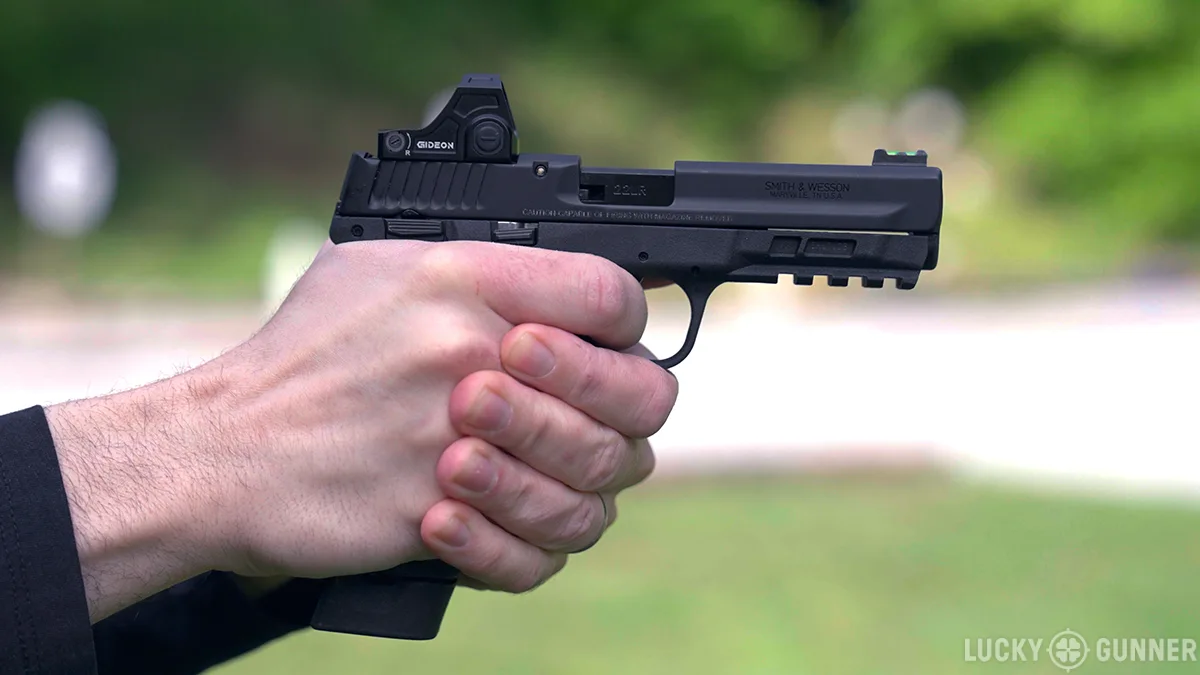
And trainer pistols simply look cooler than the average target-style .22. That can be a big deal for a novice shooter. They want to feel like they’ve fired a “real gun” and they might not get that satisfaction from a traditional target pistol. For some new shooters, it’s the complete opposite – they’d rather shoot something that doesn’t look tactical and scary. It depends on the person.
Trainers for Dedicated Shooters
Now, for a more experienced, dedicated shooter who’s trying to develop muscle memory and work on speed and accuracy, the pseudo-trainers have some downsides. These shooters are going to want everything to be as close to their centerfire pistol as possible. At the very least, it would be ideal if they fit the same holster. And that’s not going to be the case for most pseudo-trainers.
You can still get some training benefits even if the gun isn’t quite the same, but I think the more skilled you are, the more those little differences start to matter. At a certain point, you’re likely going to get more mileage out of dry practice with your centerfire pistol than from shooting a .22 that’s a less-than-perfect analog.
Choosing the Right .22 Trainer
Whether it’s a true trainer or a pseudo trainer, there are a lot of things you can do with these guns. If you get the right one, it can fill multiple roles in your collection. For the upcoming comparison review, I’m running each gun through the same series of tests I used for the other categories in Project Rimfire. We’ve got accuracy, speed, and practical tests, and I’m tracking reliability. I’ll also give you my two cents on the strengths and weaknesses of each model and whether it’s more of a true trainer or a pseudo trainer. But I’ll leave it up to you to decide which set of features meets your needs because everyone’s use-case is different.
I hope this was helpful. At the very least, it’ll let me do this comparison review without getting too bogged down with definitions and categories. So thanks for indulging me. The trainer pistol roundup video is coming soon, so make sure you’re subscribed. And next time you need some ammo, be sure to get it from us with lightning fast shipping at Lucky Gunner.