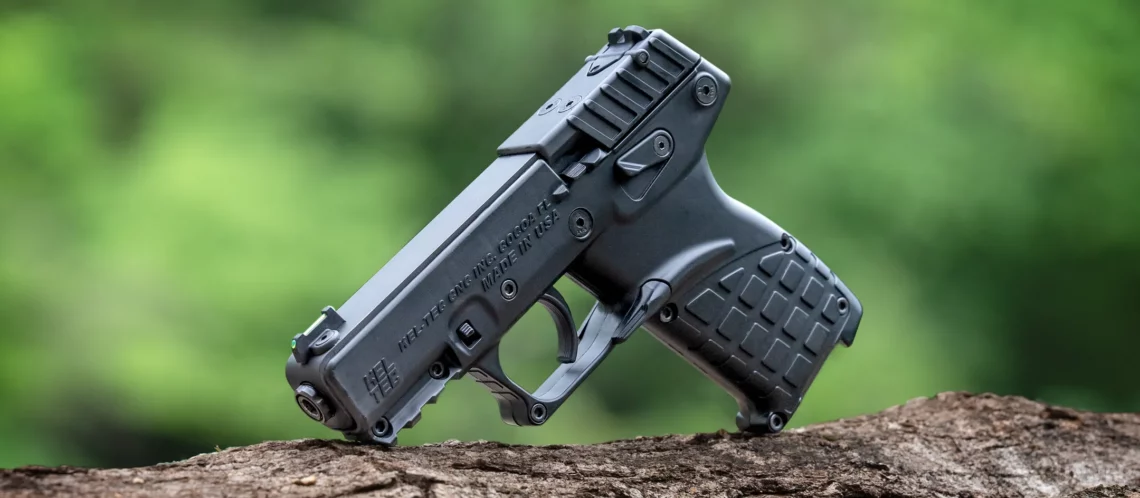

The KelTec P17 is the cheapest trainer-style .22 pistol on the market. But unlike most guns in its price range, it might not be a complete steaming pile of refuse.
We’re taking a detailed look at the P17’s reliability, accuracy, features, and quirks to see whether this lightweight, 17-shot rimfire pistol lives up to the hype. Is it a legitimate bargain, or just another weird KelTec range toy?
Details are in the video below, or keep scrolling to read the full transcript. And if you haven’t already, be sure to catch the rest of Project Rimfire.
Hey everybody, I’m Chris Baker from Lucky Gunner and today we’re looking at the Kel-Tec P17: a trainer-style .22 pistol that’s under 250 bucks.
That’s right, everyone, Project Rimfire is back! I’m continuing my quest to review a ridiculous number of handguns, all chambered for .22 LR. I’m breaking them down by category. We’ve already done pocket pistols and medium frame revolvers. Now we’re moving on to trainer-style pistols. These are .22s that have the same basic features, controls, and overall feel as a typical centerfire pistol.
This is by far the largest category I’m covering for Project Rimfire. I’ll be doing a big trainer pistol roundup comparison video soon. But first, I’ve singled out a few of them for individual reviews. Why, out of all of the .22 trainer pistols on the market, would I choose to spotlight the P17? Well, because when I first announced this project, this was the most-requested gun for me to include.
KelTec P17: The Basics
So let’s look at what we’ve got here. KelTec released the P17 in 2019. It was notable for having 16-round magazines when almost every other .22 topped out at 10 rounds. But earlier that year, Taurus had released the TX-22, also with 16-round mags, and several other .22 trainers have since come out with similar capacities.
A more distinctive feature might be the weight. It’s only 11.6 ounces empty, 14 and a half fully loaded. That’s lighter than most pocket pistols, despite being closer in size to a compact. It’s got a 3.8-inch barrel and a width of just 9/10 of an inch.
The barrel is threaded and it comes with a thread extender for standard 1/2×28 suppressors. The front sight is a green fiber optic and in the rear we have a black serrated sight adjustable for windage and elevation.
Standard vs. Optic-Ready P17
This version of the P17 is technically not optic-ready. They do make an optic-ready version that’s drilled and tapped and has studs to fit RMSc-pattern optics. The slide also has cutouts to compensate for the weight of an optic, no rear sight, and a taller front sight to co-witness with the backup rear sight notch in your optic.
The screws here on the standard slide are just to hold the parts of the slide together – they are not for mounting optics. But you can buy aftermarket optic plates that use those two holes, which is what I did.
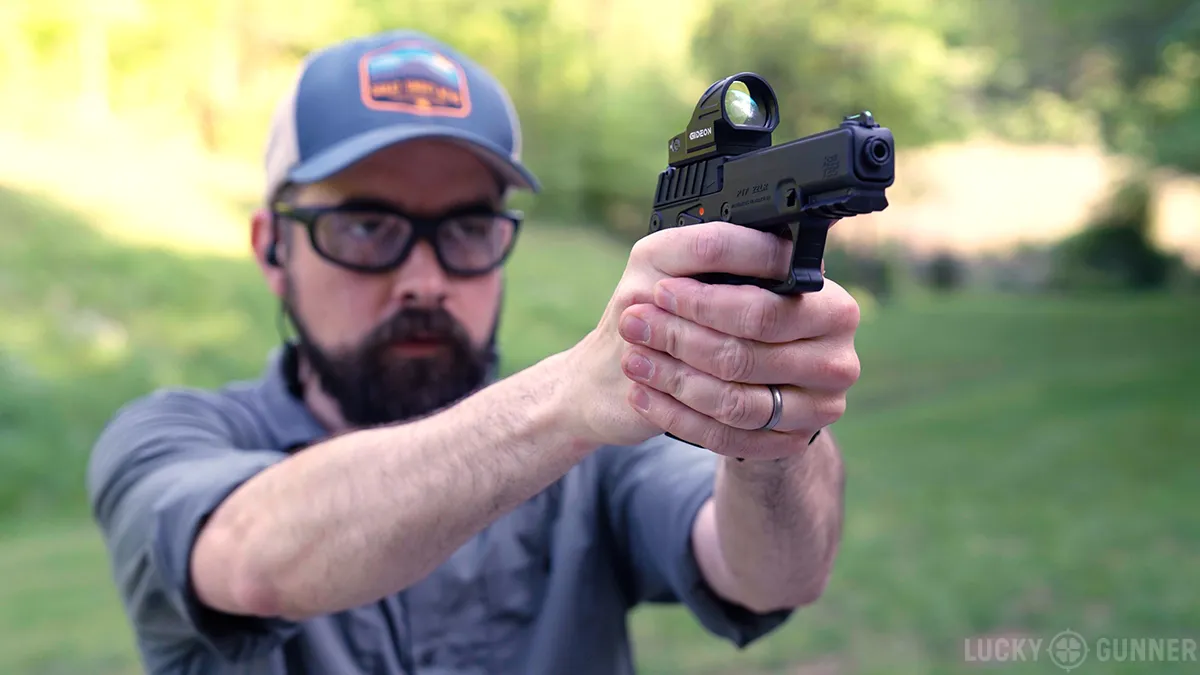
Red Dot Mate sells plates for six different optic footprints. I wanted to try a full size optic on this thing so I got an RMR-pattern plate and mounted one of the Gideon Omega green dot sights that Gideon has generously provided for Project Rimfire. Tiny gun, big optic – it looks dumb, but I love that big round optic window.
Reliability & Accuracy
Now, there’s no guarantee any optic will work on the non-optic ready version of this gun. In this case, the optic and mount added an ounce and a half to a slide that only weighs four ounces to begin with. Using CCI Standard Velocity, I had about a 20% failure rate. Ironically, it ran fine when we were recording, but not so much off camera. They were all failures to extract and feed, which means the slide is probably not coming back quite as far as it’s supposed to. Without an optic mounted, that dropped to about a 3% failure rate.
But it liked CCI Mini-Mags a lot better. Not quite flawless, but I had 300 trouble-free rounds with the optic mounted and a single failure to eject in 300 rounds without the optic.
I would not necessarily expect every standard P17 to work that well with optics. If you want a dot, I would suggest getting the optic-ready version. Originally, they just sold the optic ready slide as an accessory you had to buy separately, but now they offer P17s with that slide included. Usually they also come with some kind of cheap optic pre-mounted, but sometimes you can find them without for about $20 more than the standard P17.
Let’s talk about accuracy. From a bench rest at 25 yards, I got an average 5-shot group size of 2.6 inches. It liked CCI Standard Velocity best with a 1.9-inch average.
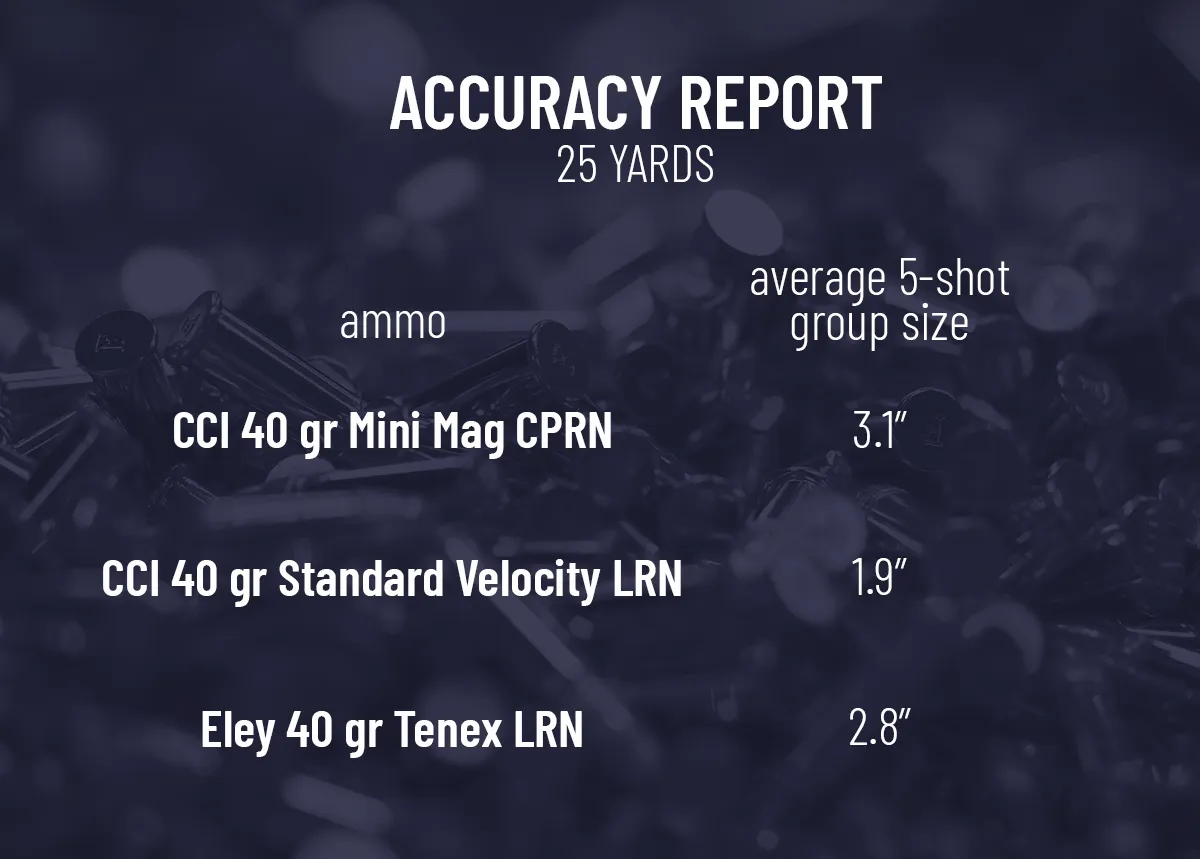
Nothing special, but not bad at all when you take into account the price.
The Budget King?
And I think that’s the real reason this pistol has gotten so much attention. The MSRP is only $239.99. Right now, it’s usually selling for around $220. Most guns you can get for under $250 are hot garbage, but this is not one of them.
I’m not saying the P17 is the pinnacle of rimfire quality. But it does play to KelTec’s strengths. They know how to design a gun that’s cheap to manufacture. And design features that don’t hold up so well with a compact 9mm or a 12 gauge bullpup are perfectly adequate for .22 LR. They’re also not doing anything overly ambitious like the quad-stack magazines they made for the KelTec CP33. The P17 is a fairly basic blowback .22 pistol design.
A lot of the major gun companies outsource the production and sometimes even the design of their trainer-style .22s. They’re not necessarily made with the same level of quality and attention that goes into their centerfire pistols. So if you’re going to get KelTec-level quality anyway, why not get it at a KelTec price?
KelTec Quirks
But of course, like everything in the KelTec catalog, the P17 has some odd features. Let’s take a closer look at the controls. The trigger is nice… maybe too nice. This is a single action internal hammer fired gun. You get a little bit of takeup and then kind of a mushy break that comes at 2 and a half pounds. That’s very light for a trainer-style pistol. Most people are probably not carrying these, but I think the trigger would be dangerously light for a defensive pistol. But it’s a lot of fun at the range.
It has an ambidextrous paddle-style mag release. Nothing wrong with that if you’re into that sort of thing, but it’s an unusual choice. The slide stop is on the left side only. It’s smaller than average and it’s all the way up here by the ejection port.
And the ambi manual safety is a bit far forward on the frame. If I have the gun on safe at a ready position with a thumbs-forward grip, I can’t really disengage it without moving my support hand out of the way first.
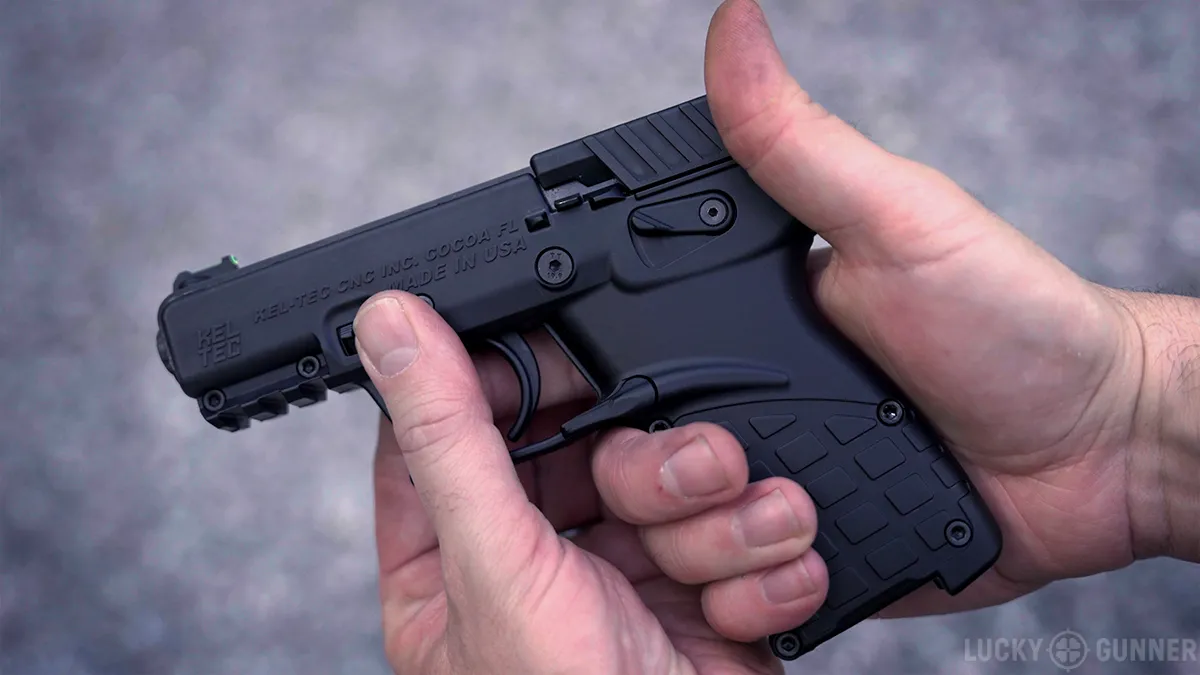
None of these oddities are really a big deal if you’re just using this as a plinker. But if you actually want a training stand-in for a centerfire pistol, you’re going to develop some muscle memory with the P17 that will not transfer over.
That Other Budget .22 Trainer…
The Taurus TX-22 is also a budget priced .22 trainer, but it has more conventional controls and layout. In fact, most things the P17 does, the TX-22 does just a little better.
That also comes with a slightly higher price tag. For most variants of the TX-22, prices have run around $250-300. But lately, they’ve been hard to find thanks to a spike in demand stemming from the popularity of aftermarket forced reset triggers. I’ll be digging into that in a future installment of Project Rimfire.
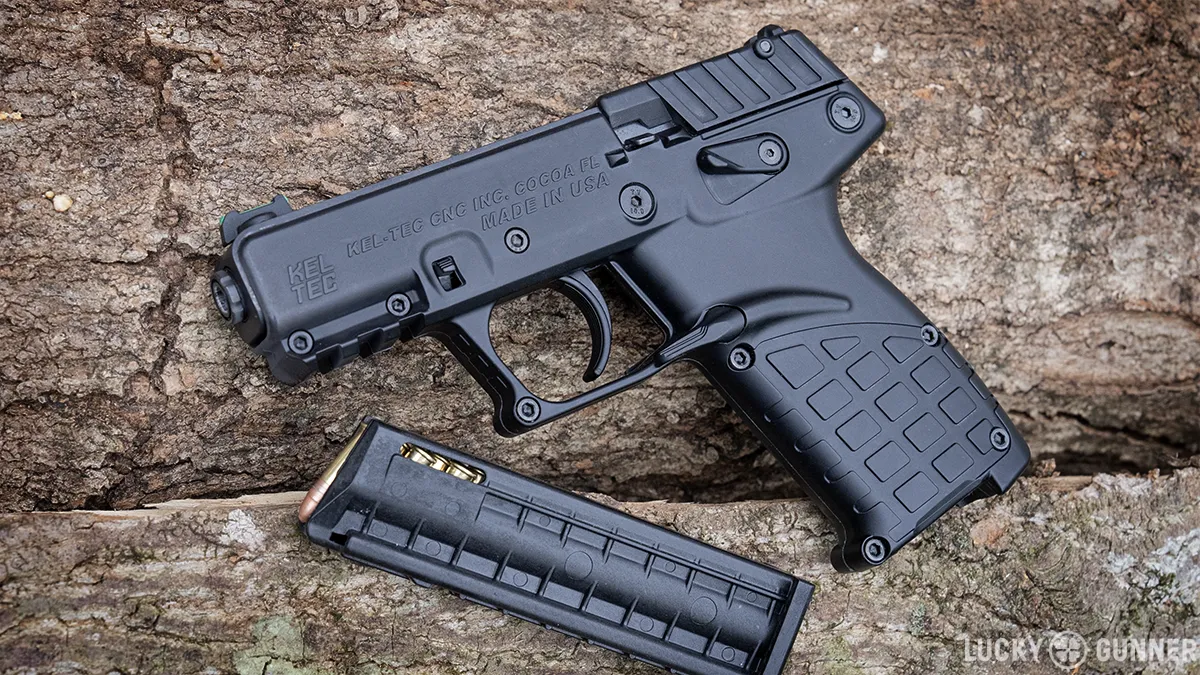
If you’re not looking for a pint-sized submachine gun and you don’t want to pay inflated prices for a Taurus, the P17 does offer a lot of value. It adds minimal weight to a backpack or tackle box, and it’s more reliable and capable than a .22 pocket pistol. I don’t really love any single aspect of the P17, but it does everything I think you could expect a $220 pistol to do.
Alright guys, that’s all I’ve got for now. I’ll be back soon with more Project Rimfire. In the meantime, make sure you are subscribed to our channel, and the next time you need ammo, get it from us with lightning fast shipping at Lucky Gunner.


