
Project Rimfire continues! I’m comparing five medium-frame .22 LR double-action revolvers after subjecting each one to tests for reliability, accuracy, speed, and practical shooting.
All five have their strengths, but there’s only one I actually want to keep shooting after the testing is over.
Details are in the video below, or keep scrolling to read the full transcript.
Hey everybody, I am Chris Baker from Lucky Gunner and today I’m comparing five different medium frame double action .22 revolvers.
You have entered Project Rimfire, my friends, where I am reviewing an absolutely stupid number of handguns all chambered for .22 Long Rifle.
Let’s look at our contenders for the medium frame revolver category. We have the Smith & Wesson 617 Mountain Gun, the Colt King Cobra Target, the Ruger GP100, the Taurus 992 Tracker, and just for fun, the Spohr 283 Carry.
Why?
Before we get into the comparisons, I want to tackle a couple of questions that have come up in the comments: what are these guns actually for and why do they cost so much?
We’re used to semi-auto .22s being cheaper than centerfire pistols because they’re mechanically simpler and use fewer expensive materials.
Double-action .22 revolvers are different. They’re essentially the same as their centerfire counterparts but with smaller holes. In some cases, they actually require more machining, and they’re usually produced in smaller quantities. So if you’re comparing otherwise identical models, the rimfire version will typically cost about the same, or sometimes even more.
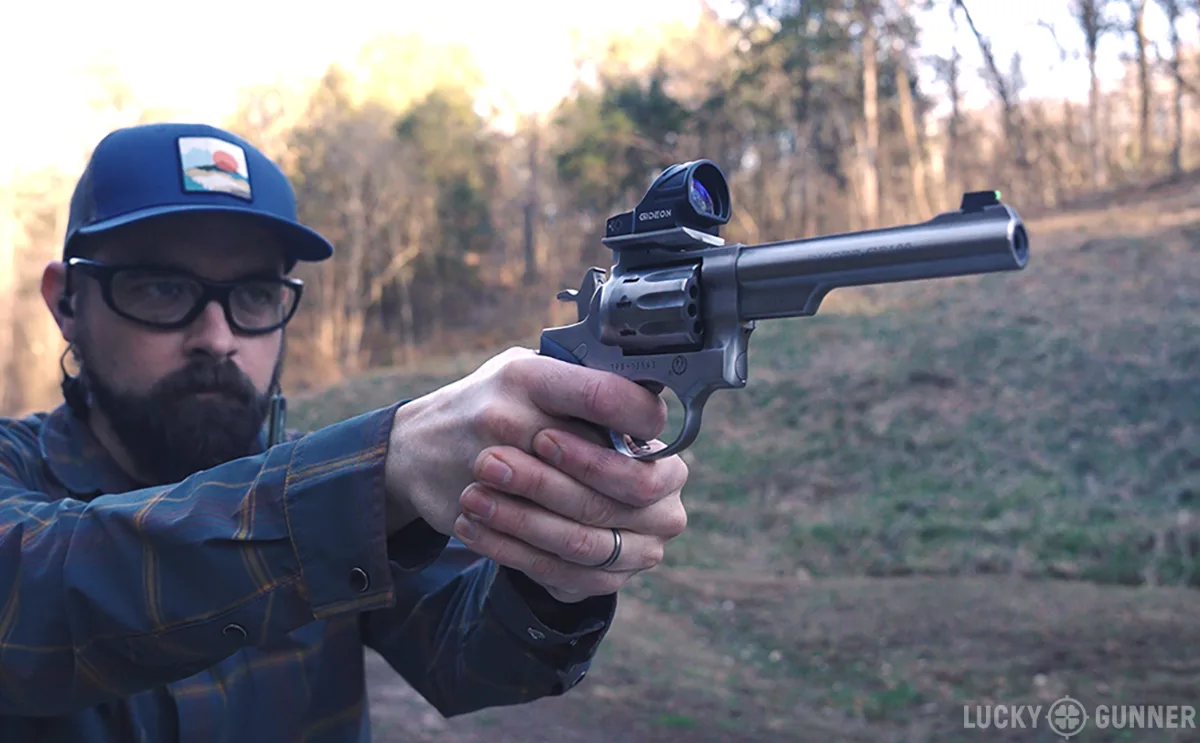
So why spend $1,000 on a medium-frame .22 revolver? They’re not ideal for self-defense. For a lightweight kit gun, a small-frame .22 usually makes more sense and for a dedicated target gun, semi-auto .22s are generally more accurate. For me, there are two main reasons to own one of these.
First, they’re outstanding training tools. You don’t need a centerfire revolver to get the training benefits that come from mastering a double-action trigger.
Second, and maybe more importantly, they’re just fun. These guns have the weight, balance, and mechanical feel of a centerfire revolver, without the noise, recoil, or ammunition cost. Unlike a lot of semi-auto .22s, they feel like serious guns instead of range toys.
And what makes this lineup especially compelling is that every one of these is a legitimately good revolver. Not equally good, but each one has some compelling strengths. Let’s take a closer look at the five contenders, starting with the two you may have already seen if you’ve been following this series.
Basic Specs
The Smith & Wesson 617 Mountain Gun is the newest variant of their 10-shot stainless K-frame featuring a 4-inch half-lug barrel and no internal lock. It’s a Lipsey’s distributor exclusive. MSRP is $1,199, and it’s currently selling at or above that due to limited supply. The price should go down a bit once production catches up.
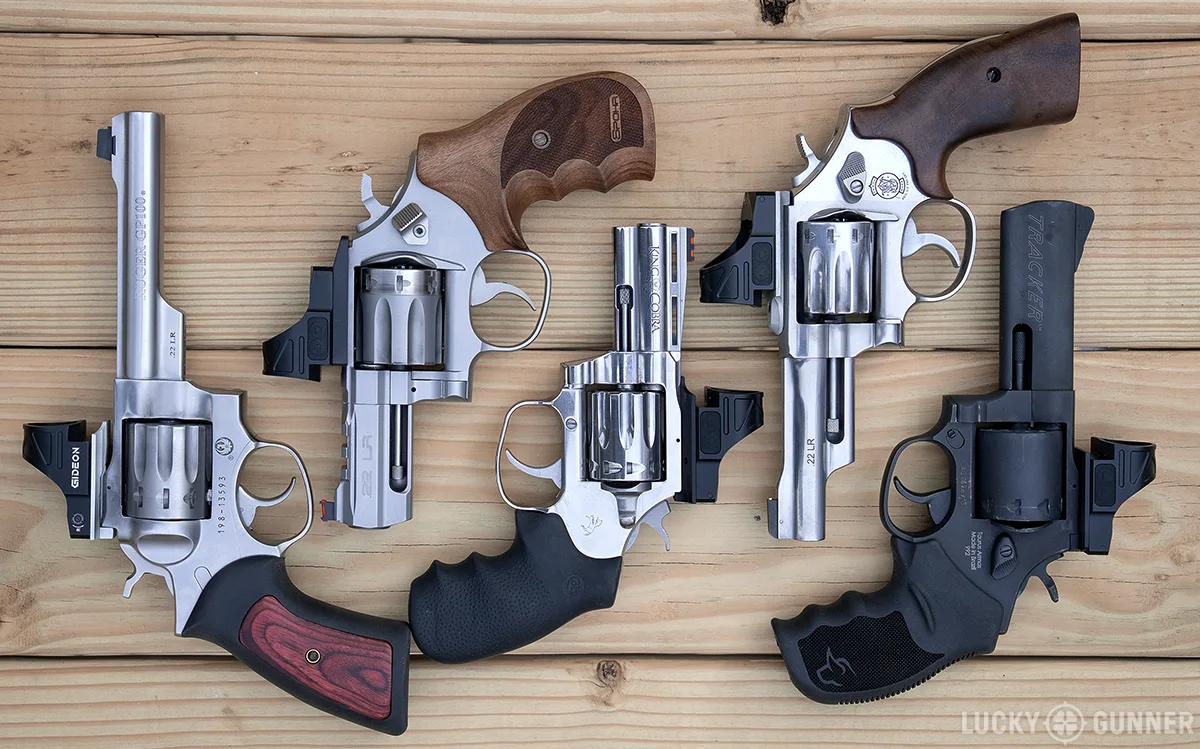
The Colt King Cobra Target is offered in 5 barrel length options and we’re looking at the 3-inch model. Like the Smith, it’s a 10-shot stainless revolver. Most retailers are listing these in the $850 to $950 range.
The .22 version of the Ruger GP100 is another 10-shot stainless revolver. This one has a 5.5-inch barrel and partial underlug. Ruger previously offered a 4-inch model, but this is the only configuration available right now. You can typically find these for under $900.
The Taurus 992 Tracker we have here is the matte black 4-inch version. It’s also offered in stainless or with a 6.5-inch barrel. It’s a 9-shot revolver because it includes both a .22 LR and a .22 Magnum cylinder. Retail pricing is usually around $600-700.
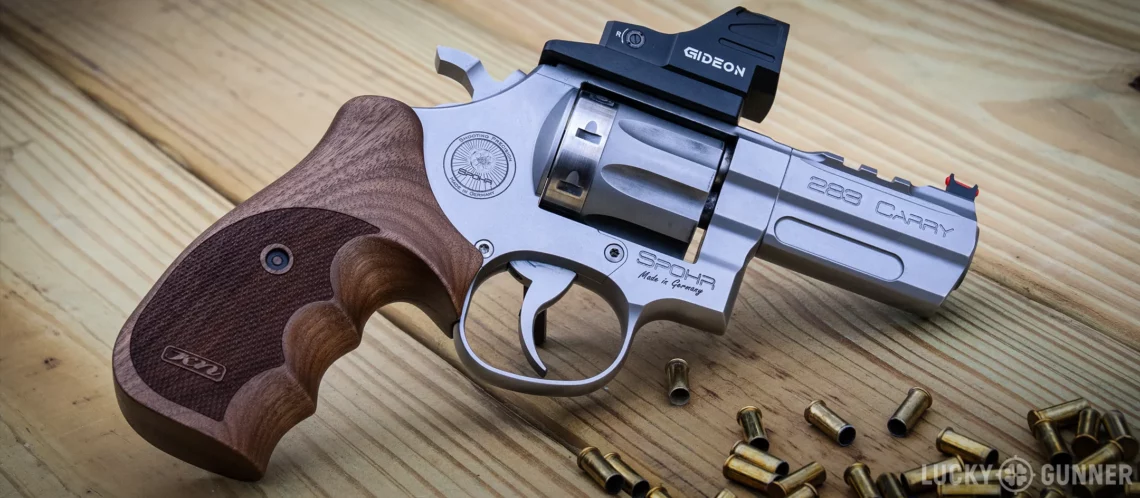
Spohr is a premium German revolver manufacturer, and the 283 Carry is their 3-inch .22LR. They also offer longer barrel lengths and versions without the integral picatinny rail. The design is patterned after the Smith & Wesson L-frame with a number of improvements like a user-adjustable mainspring to tweak the double action trigger weight. Although the cylinder could physically hold ten rounds, German engineering regulations limit it to eight. These are sold directly by Spohr and priced at $3,399.
I realize very few people are comparison-shopping a $3,400 revolver with a Taurus, but after being impressed with Spohr’s .44 Magnum last year, I thought it would be interesting to see how their rimfire stacks up against these others.
The Tests
Every gun in Project Rimfire goes through four tests: reliability, accuracy, speed, and a practical test. After spending some time with these revolvers, I thought I knew how this would play out, but there were a few surprises.
For all of the testing, I installed Gideon Omega green dot sights on each gun. Huge thanks to Gideon for providing the optics. Having identical dots across all five revolvers helped remove as many variables as possible. The Omega has a large window and a bright dot, which made it easier to wring out the best performance from each gun.
Reliability
Let’s start with the reliability test. The standard here is simple: 100 rounds of CCI Mini-Mags, clean the gun, then 100 rounds of CCI Standard Velocity. All five passed without issue.
That’s not surprising. Revolvers don’t suffer the same cycling problems as semi-autos. But .22 revolvers have their own quirks. Rimfire ammo leaves behind a lot of fouling, and if debris builds up in the chambers or under the extractor star, cartridges may not seat fully. When that happens, the firing pin’s energy gets used up pushing the case forward instead of crushing the rim. That’s why .22 revolvers often have heavier hammer springs.
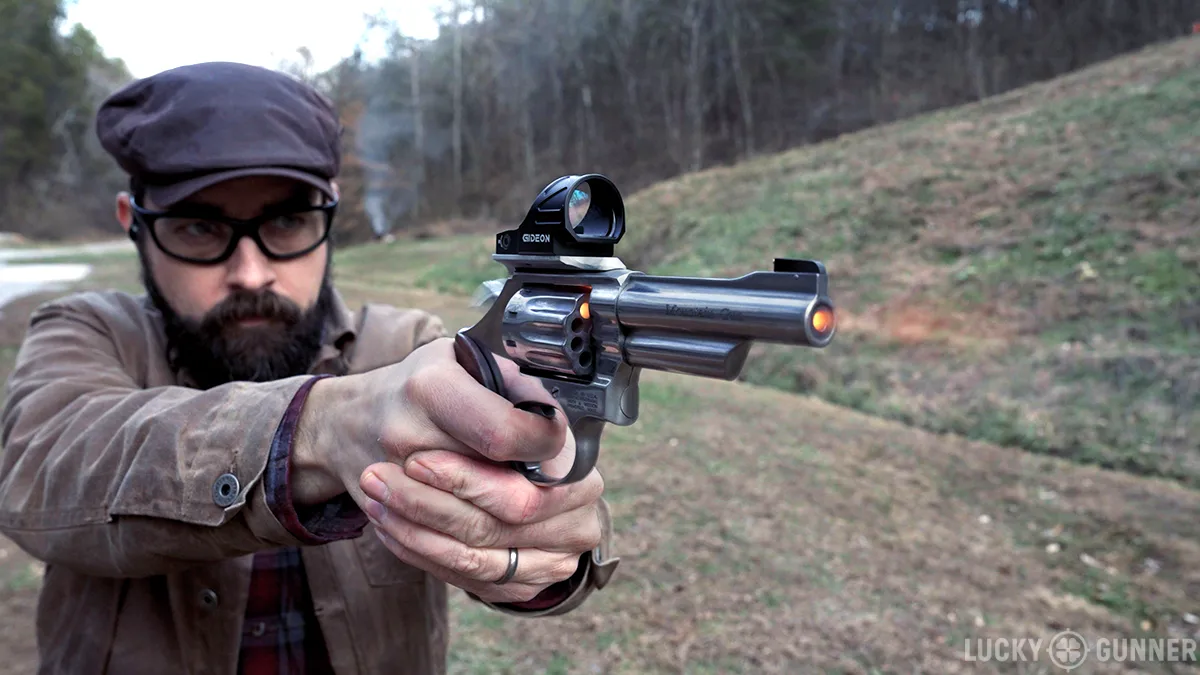
With that in mind, only one gun gave me ignition trouble: the Smith & Wesson 617. It runs perfectly when it’s clean, but after about 200–300 rounds, I started getting occasional failures to fire. The trade-off is that it has the lightest, smoothest action of the group.
Speed Test
For the speed test, I’m using the Steel Challenge stage ‘Smoke and Hope.’ From low ready, you engage the four large plates in any order, then the smaller stop plate. I shot ten runs with each gun and added the best four times.
The Taurus came in a distant fifth place, then there was a tight spread between the Smith, Colt, and Spohr. And the definitive win goes to the GP100 with a cumulative 7.62 seconds – that’s four runs under two seconds each.
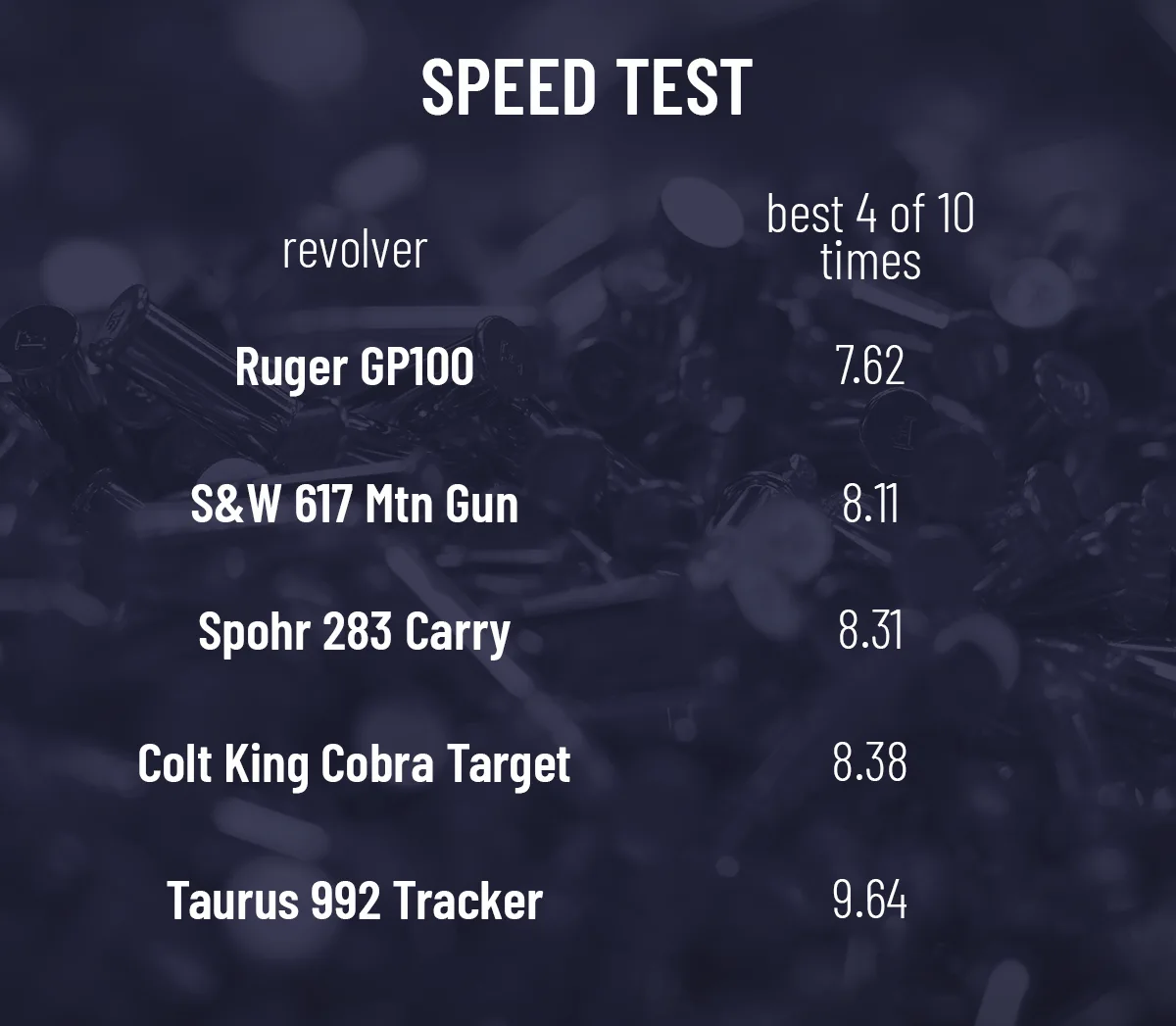
This test is heavily influenced by my ability, preferences and prior experience, so the “why” matters more than the raw numbers.
The Taurus struggled because of the trigger. It’s not just heavy, it’s also uneven. It starts out light and then it gets super heavy at end of the trigger stroke. It’s difficult to shoot fast without steering the gun off target.
The Spohr is very heavy for a 3-inch gun. I shot some good times with it, but for the first few runs, it felt sluggish on the transitions.
The GP100 was the big surprise here. The trigger is smooth, but very heavy, so I had low expectations. But for whatever reason — barrel length, balance, grip, or some combination — the dot was just always right where I wanted it to be. If I was going to take one of these guns to some kind of action pistol competition, it would be this one.
Accuracy
But now we have to talk about accuracy, and this is, sadly, where the party ends for the GP100. For the accuracy test, I fired two 5-shot groups from a bench rest at 25 yards with four different loads.
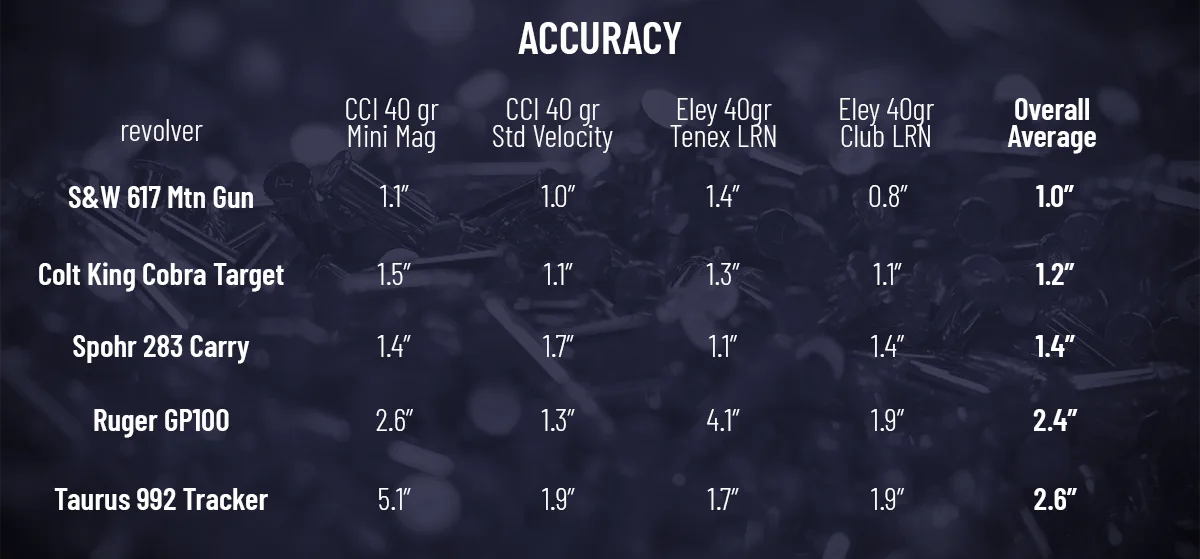
The Taurus and GP100 each shot a couple of good groups, but there were a lot of fliers. The Tarurus disliked Mini-Mags and the Ruger showed occasional keyholing with Eley Tenex. I also shot some magnum groups with the Taurus and the accuracy was even worse. The Spohr performed well, but not at the level I expected based on my experience with their .44 Magnum. I was hoping for consistent sub-one-inch groups, and it didn’t quite deliver. The Colt and Smith both shot very well for production revolvers, with the Smith taking the lead. It shot multiple sub-one-inch groups and performed especially well with Eley Club.
Practical Test
The practical test combines speed and accuracy. I place a B-8 bullseye target at 10 yards and fire 8 shots as quickly as possible while keeping my hits in the black (hopefully). Then, I combine my time and score using the formula below, which heavily penalizes misses. I shoot five runs with each gun.
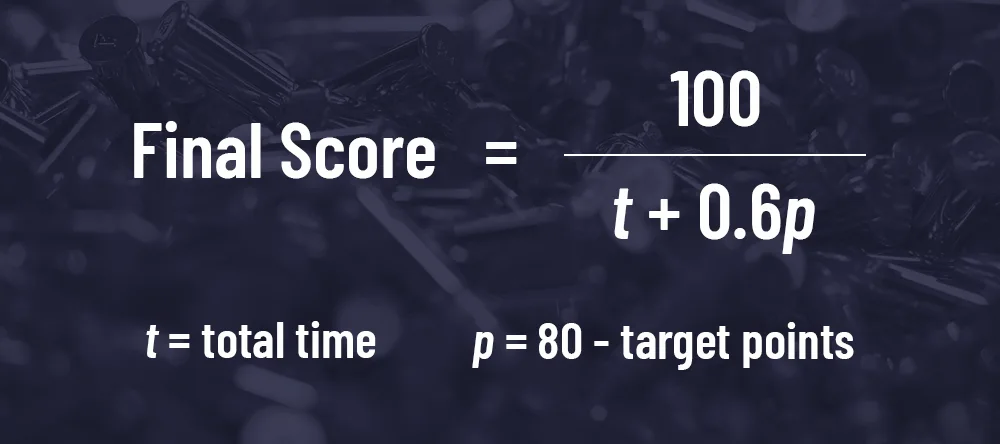
For double action revolvers, the practical test is mostly about trigger control. The gun’s overall weight and balance also play an important role. They help determine how much the muzzle wants to move as you press the trigger.
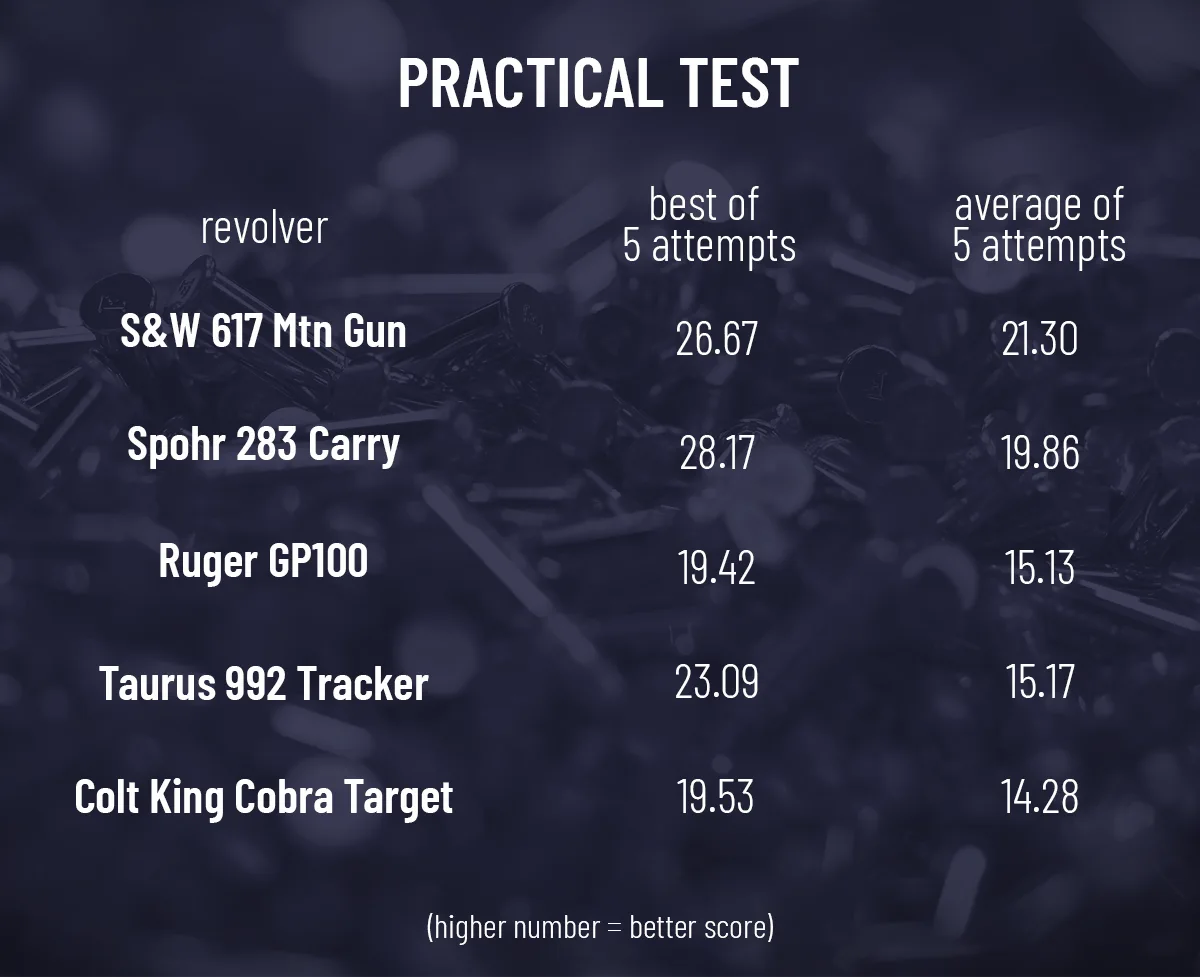
The Smith and Spohr both stood out. The Smith’s trigger is exceptionally smooth. I did swap the factory grips for a set of Altamont Altai grips that fit my hand better after a little sanding, so that may have helped.
The weight of the Spohr was an asset for this test. It’s forgiving of a less-than-perfect trigger press and has very little muzzle rise. The Ruger and Taurus actions both have room for improvement, so it’s no surprise their scores were lower.
I was surprised that I didn’t do better with the Colt. It has a really nice action but I think it struggled because it’s just lighter than the others. I probably should have compensated with a bit more grip pressure.
Overall Impressions
The test results are interesting. But they don’t tell you which gun you will actually want to shoot. And that’s where my completely unbiased and totally correct opinion comes in.
Spohr 283 Carry
We’ll start with the Spohr 283 Carry. Like I said in my review of their .44 Magnum, this is what a revolver looks like when quality control is taken seriously. The machining, fit, and finish are exceptional. It’s a beautifully made gun. But that craftsmanship did not translate into superior performance. The Smith and the Colt were both more accurate and the action was good, but not best in its class.
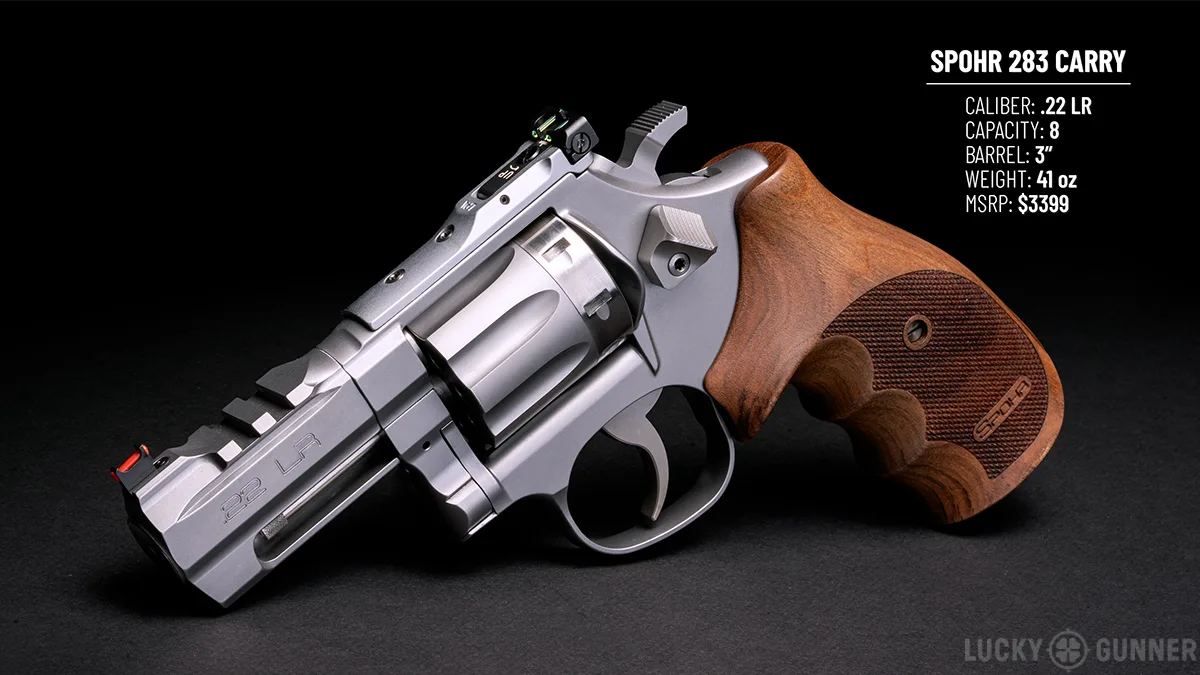
Then there’s the dry-fire issue. With most modern .22 revolvers, occasional dry firing is not a big deal. The Spohr is different. There’s a reason it ships with a red tag on the trigger warning you not to dry fire it — even a single dry fire leaves a visible indentation on the chamber edge. Do that a handful of times and you’re likely to create functional problems.
That quirk might be easier to overlook if it clearly outperformed everything else here… but it doesn’t.
Ruger GP100
The first revolver I ever owned was a GP100, so I’ll admit I have a soft spot for these guns. I didn’t love this particular example, but I do think it has a lot of potential.
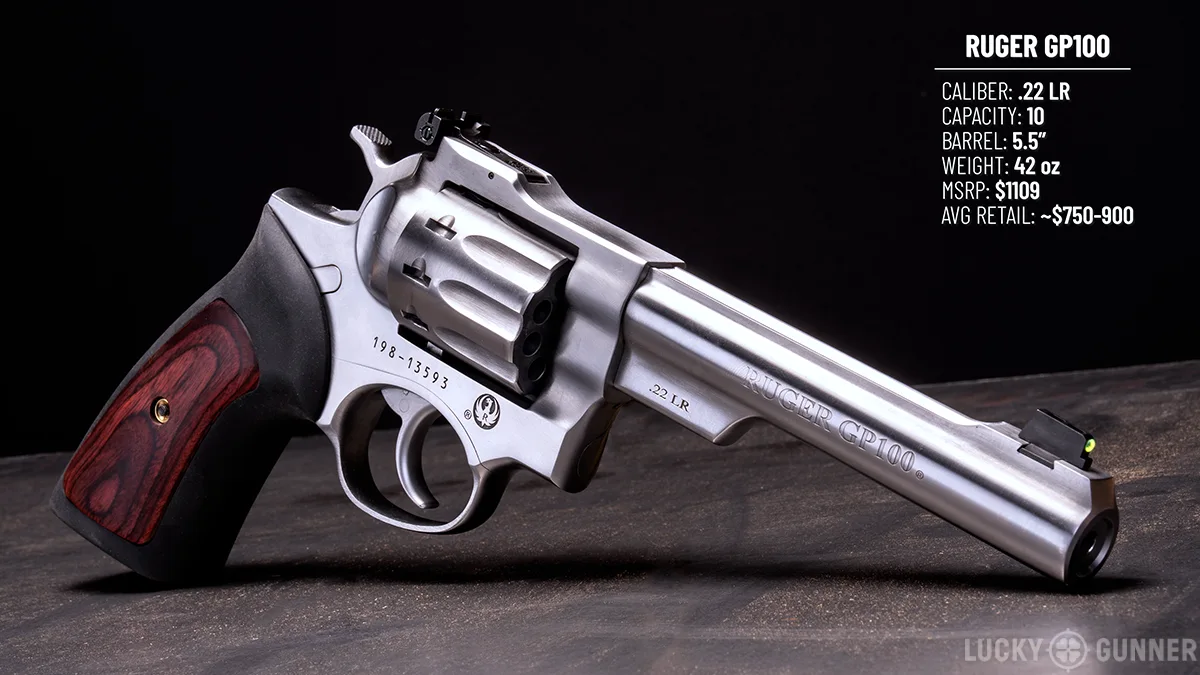
The main drawback is the trigger. It’s smooth, but extremely heavy — easily north of 15 pounds. I tried a spring kit, but that hurt reliability. It dominated the speed test despite the heavy trigger, which tells me there’s a lot more performance possible if the trigger was improved, maybe with some help from a gunsmith.
The accuracy issues are a concern, especially the keyholing. If this was my personal gun, I’d send it back to Ruger for repair. Most reports I’ve seen on the .22 GP100 show 1–2 inch groups, which is more in line with what I would expect from this gun.
It would also be nice to see a 4-inch or 3-inch model, especially considering the popularity of those barrel lengths for GP100s in other calibers.
Taurus 992 Tracker
The Taurus 992 Tracker is exactly what you’d expect. It’s the budget option in this group, and it performs like it. If you simply want a less expensive .22 revolver, I’d probably point you toward the Ruger SP101 instead. It’s technically a small frame, but it handles kind of like a medium and it’s not a budget-tier gun.
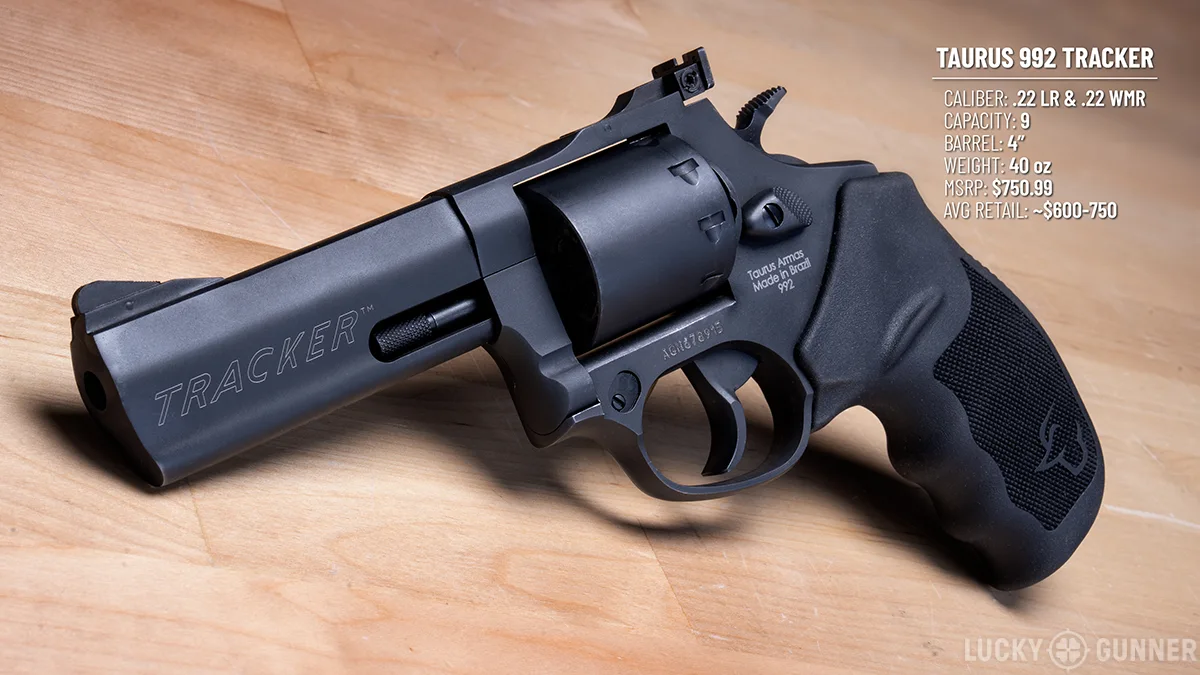
Where the Taurus stands out is the convertible cylinder. The option to switch between .22 LR and Magnum is undeniably cool. That said, accuracy with the Magnum cylinder wasn’t great.
From the factory, the double action trigger is easily the least appealing out of all of these. I tried a 12-pound Wolff hammer spring and it improved significantly. It was still reliable with .22 LR but not at all with .22 Magnum. So you can get a more usable trigger out of this gun, but not if you plan to shoot magnums regularly.
Colt King Cobra Target
The Colt King Cobra Target hits a real sweet spot for a .22 revolver, with a size right between the small and medium frame guns. And Colt gives you more barrel length options than anyone else in this category.
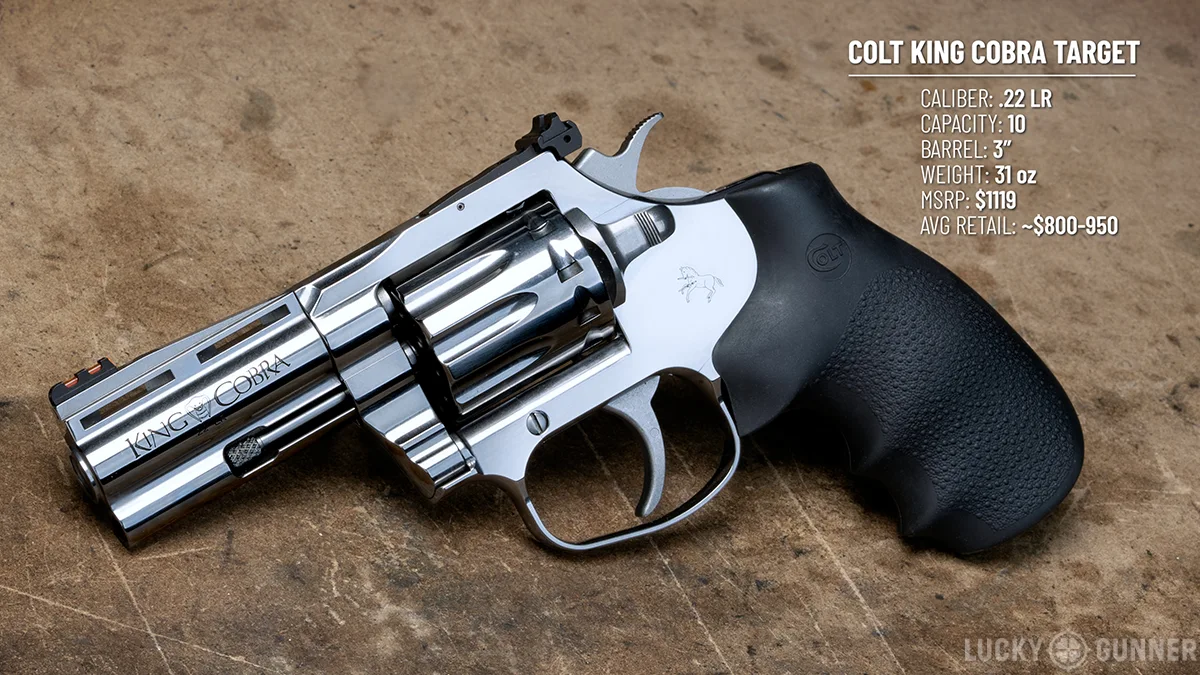
The double-action trigger is classic Colt. It stacks, and it has that slightly ambiguous reset that can trip you up if you’re used to Smith or Ruger actions. I never completely warmed up to it, especially for rapid fire. But that doesn’t make it bad. It’s actually light and smooth for a rimfire revolver. If you’re not already conditioned to a different trigger feel, there’s nothing inherently wrong with it.
Overall, this is a very approachable gun. The sights are good, the grip works, and the trigger is usable right out of the box. Out of these five, the Colt is probably the easiest starting point for someone brand new to double-action revolvers.
S&W 617 Mountain Gun
And finally, the Smith & Wesson 617 Mountain Gun. I’ll admit up front that I’m partial to Smith revolvers, so it shouldn’t surprise anyone that this was my favorite of the group. But that was not a foregone conclusion. Smith could have easily gotten this wrong, and my disappointment would have been… intense.
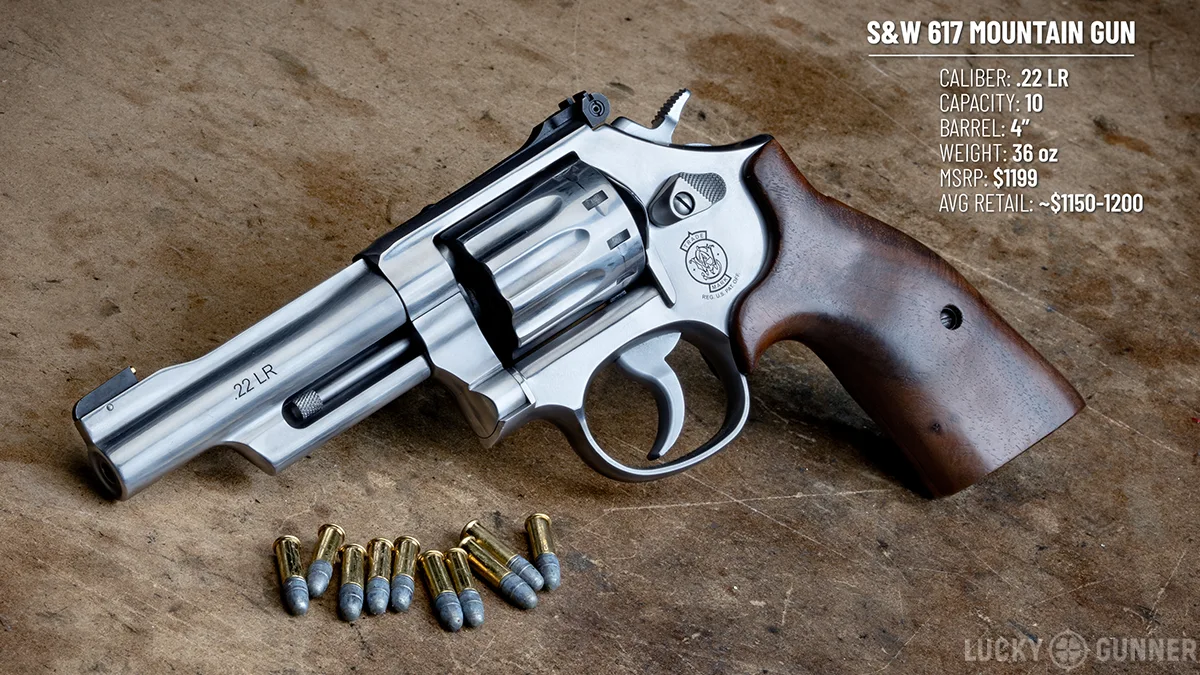
Brand preference aside, the performance speaks for itself. The accuracy was outstanding. Six of the eight groups I fired were one inch or less. That precision is backed up by a fantastic action. It’s right at nine pounds, extremely smooth, and easily on par with any non-custom Smith I’ve handled.
After some long range sessions of filming and data collection, the 617 is always the one I pack up last so I can shoot just one more box of ammo. Not for any kind of testing, but just because it’s fun. And that’s about the highest complement I can give it.
Okay guys, that wraps up our second category for Project Rimfire. I hope you enjoyed it. I’m going to take a break from this series for a few weeks to cover some other topics before we return with a new category. What it going to be? You’ll have to wait to find out, so make sure you are subscribed to our channel. And next time you need some ammo, be sure to get it from us with lightning fast shipping at Lucky Gunner.