
What makes a good .22 trainer pistol? And which one is actually worth buying?
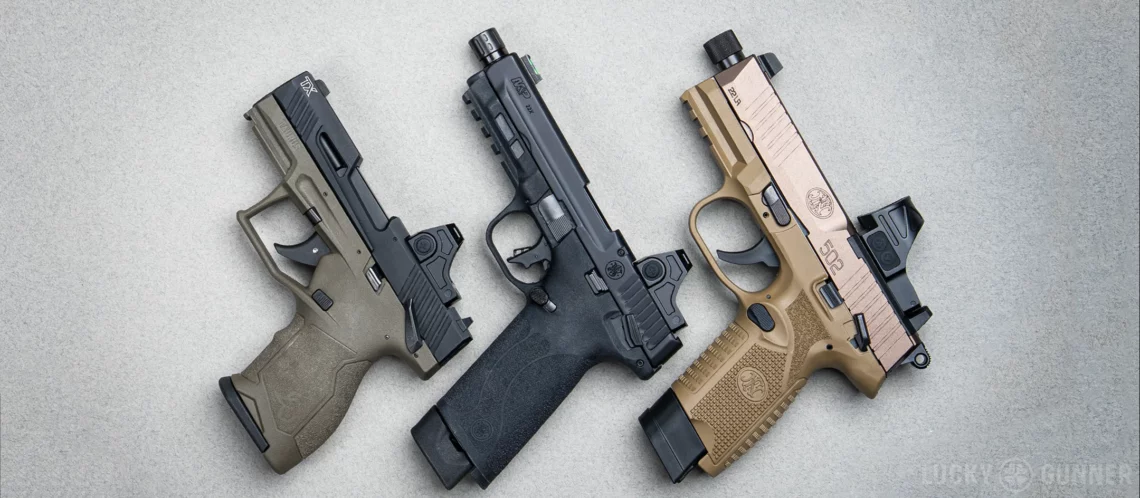
For this installment of Project Rimfire, I tested 11 current-production .22 LR trainer pistols for reliability, accuracy, speed, and practical shootability.
Details are in the video below, or keep scrolling to read the full transcript.
If you’re not seeing the video, try adjusting the privacy or ad blocker settings in your browser.
Hey everybody, I am Chris Baker from Lucky Gunner and today I am going to compare 11 different semi-automatic .22 trainer pistols.
Buckle up, kiddos. This is a big one. You are now entering Project Rimfire where I’m reviewing a nigh-impossible number of handguns chambered for the superb .22 Long Rifle Cartridge. This video will wrap up the largest of the six categories I’m covering for this series. I’ve been promising to compare 10 of these, but now it’s 11… because of inflation or something.
Last time, I talked about the history of the trainer pistol category and what exactly that term means. YouTube removed that video for reasons I can only guess. You can still watch it on our blog, the Lucky Gunner Lounge. For now, all you really need to know is that I’m splitting the .22 trainers into two sub-categories. The “true trainers” are .22 pistols that attempt to mimic the look and feel of a specific centerfire model. The more common category is for what I’m calling the “pseudo-trainers.” These have the general look and feel of centerfire defense pistols, but they’re not based on any specific model. Most shooters tend to use them less for serious training and more as general plinking and range guns.
The Contenders
Let’s look at our 11 contenders, starting with the three true-trainers. First up is the Beretta 92 Conversion Kit. We have it mounted on a completely stock Beretta 92FS frame. Next is the Glock conversion kit from Advantage Arms. These kits are model and generation-specific. The one we have is for a Gen 3 Glock 17. And then we have the Glock 44, which is essentially a .22 version of the compact Glock 19.
For the pseudo-trainers we have the Walther P22, the Smith & Wesson M&P 22 Compact, the Keltec P17, the Smith & Wesson M&P 22X, the Sig Sauer P322, the FN 502 Tactical, and the Taurus TX22. We have two versions of that one, the full size TORO and the Compact.
If your favorite .22 trainer didn’t make the list, keep in mind I am limiting this project to current production models only. A lot of .22 trainers have been discontinued, even some of the fairly popular ones like the Ruger SR22. My apologies to the 1911 fans. There are lots of 1911 trainer pistols and none of them made it into this review. I promise I don’t have anything against 1911s, but I had to draw the line somewhere because this already took forever. If you guys actually care, let me know and I might come back around and cover those in a later review.
Test Results
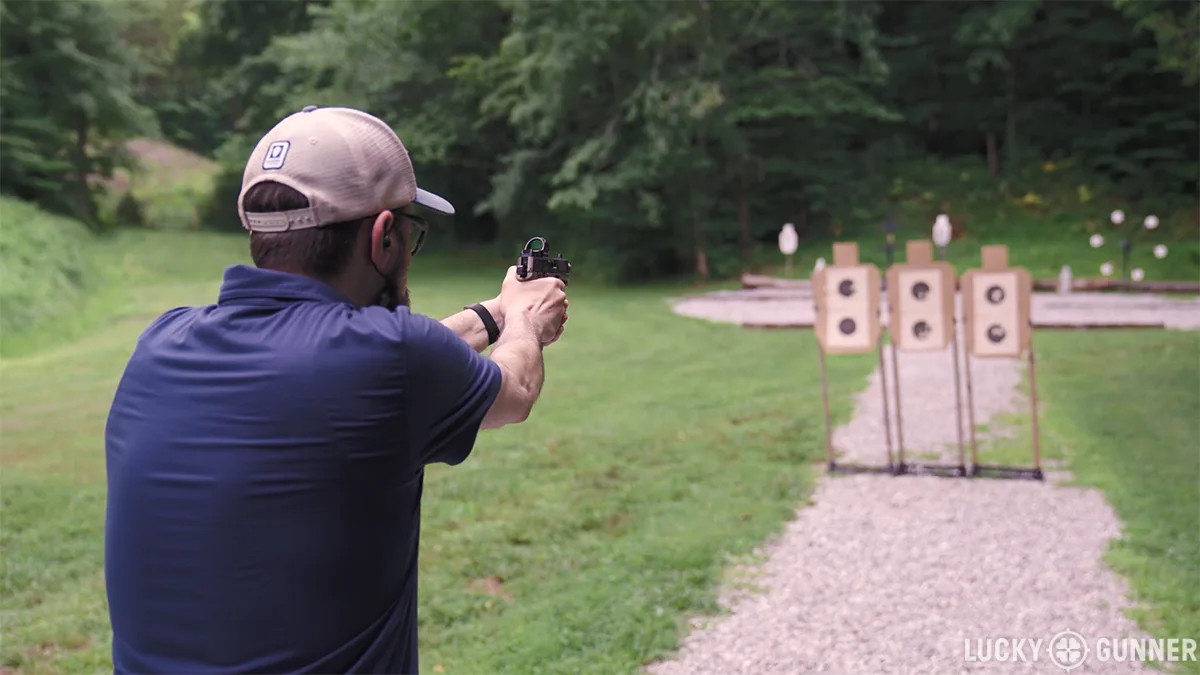
I’m running every gun in Project Rimfire through four tests: reliability, accuracy, speed, and a practical test. For these tests, I’m mounting an optic to every gun that has that option. Huge thanks to Gideon Optics for providing all of the optics we’re using in Project Rimfire. We have the larger Gideon Omega green dot sights for guns with an RMR footprint. The smaller optics are Gideon Judge red dots for the RMSc-footprint.
Reliability Test
We’ll do the reliability test first. The standard here is simple: after a break-in period of at least 200 rounds, I clean the gun, fire 100 rounds of CCI Mini-Mags. Clean it again, then 100 rounds of CCI Standard Velocity. This is a very low bar for these guns to pass, but since .22s are notoriously fussy, we can still see which guns are most prone to malfunctions.
| Model | Failure Rate CCI Mini Mag | Failure Rate CCI Std Velocity |
|---|---|---|
| FN 502 Tactical | 0% | 0% |
| Glock 44 | 0% | 0% |
| Sig Sauer P322 | 0% | 0% |
| Taurus TX-22 TORO | 0% | 0% |
| Beretta 92 Conversion | 0% | 1% |
| Smith & Wesson M&P 22X | 0% | 1% |
| Walther P22 | 0% | 1% |
| KelTec P17 | 0% | 3% |
| Smith & Wesson M&P 22 Compact | 0% | 6% |
| Taurus TX-22 Compact | 6% | 9% |
| Advantage Arms Conversion | 5% | 100% |
Four of the eleven trainer pistols passed with zero stoppages. Five of them had issues with CCI Standard Velocity but ran fine with Mini Mags. For the KelTec, I should mention that this is not technically the optic-ready version of the slide that has the cutouts to make it lighter, so I removed the optic for the reliability test. With the optic, it’s even worse with Standard Velocity, but still runs with Mini-Mags.
The TX22 Compact had lots of failures to extract with both loads. I mentioned this in our recent TX22 review and it seems to be getting worse. It probably needs a trip back to the factory.
The Advantage Arms conversion kit would not run at all with Standard Velocity. To be fair, the owner’s manual specifically says that load might cause trouble. They recommend Mini-Mags, but even then, I had five failures to feed. I think the full size optic adds just a little too much weight.
Speed Test
For the speed test, I’m using the Steel Challenge stage ‘Smoke and Hope.’ From low ready, you engage the four large plates in any order, then the smaller stop plate. I shot ten runs with each gun and added the best four times together.
| Model | Speed Test |
|---|---|
| Taurus TX-22 TORO | 7.31 |
| Glock 44 | 7.66 |
| Taurus TX-22 Compact | 7.75 |
| FN 502 Tactical | 7.79 |
| Beretta 92 Conversion | 7.85 |
| Advantage Arms Conversion | 7.99 |
| Sig Sauer P322 | 8.4 |
| KelTec P17 | 8.27 |
| Smith & Wesson M&P 22X | 8.69 |
| Smith & Wesson M&P 22 Compact | 9.75 |
| Walther P22 | 9.89 |
Like I always say about this test and the practical test, the results here are heavily influenced by my personal ability, preferences and what I ate for breakfast that day. The “why” matters more than the raw numbers.
That said, I don’t have a great explanation for some of the results this time around. I was not surprised the full size Taurus wound up at the top. That is just a really nice-shooting gun. But I cannot explain how the Glock 44 ended up in second place. I don’t normally shoot Glocks very well, especially not with the factory iron sights. I guess it was just a good Glock day.
At the bottom, we have the Walther and the M&P Compact. Those are the smallest guns on the list and neither have especially great iron sights. I was really surprised I didn’t do better with the Sig and the Smith 22X. They both felt good during the test, but timers don’t lie and I just wasn’t that fast.
Accuracy Test
Okay, now for the accuracy test. This one is a lot less subjective. I fire two 5-shot groups from a bench rest at 25 yards with three different loads. On our chart here, I’m sorting these by the average group size from the load each gun shot best.
| Model | CCI Mini Mag | CCI Std Velocity | Eley Tenex | Average | Best Load |
|---|---|---|---|---|---|
| Taurus TX-22 TORO | 1.2 | 1.7 | 1.9 | 1.6 | 1.2 |
| FN 502 Tactical | 1.4 | 1.6 | 1.7 | 1.5 | 1.4 |
| Sig Sauer P322 | 1.6 | 2.1 | 1.7 | 1.8 | 1.6 |
| Smith & Wesson M&P 22X | 2.6 | 2.4 | 1.6 | 2.2 | 1.6 |
| Beretta 92 Conversion | 1.9 | 2.4 | 2.7 | 2.3 | 1.9 |
| KelTec P17 | 3.1 | 1.9 | 2.8 | 2.6 | 1.9 |
| Advantage Arms Conversion | 2.1 | 2.2 | 2.0 | 2.1 | 2.0 |
| Glock 44 | 3.3 | 2.3 | 2.2 | 2.6 | 2.2 |
| Taurus TX-22 Compact | 2.5 | 3.8 | 2.6 | 2.9 | 2.5 |
| Smith & Wesson M&P 22 Compact | 3.1 | 4.6 | 4.5 | 4.0 | 3.1 |
| Walther P22 | 4.1 | 4.7 | 3.1 | 4.0 | 3.1 |
The full size Taurus and the FN were our most accurate with groups under an inch and a half. In the middle of the pack, the groups start to creep toward two inches and the least accurate guns are grouping over three inches.
Overall, these groups are right in between what we saw with the medium frame revolver and pocket pistol categories. Semi-auto trainers are not generally designed with accuracy as the top priority. The full size Taurus and the FN both have thicker barrel profiles than most of the others, so that probably helped. That is respectable accuracy, but not quite what you’re going to get out of a dedicated target pistol.
Practical Test
The practical test is my attempt to score the abstract concept of shootability. How easy is it to shoot this gun both quickly and accurately? I place a B-8 bullseye target at 10 yards and fire 8 shots as fast as possible while keeping my hits in the black (hopefully). Then, I combine my time and score with a formula that heavily penalizes misses. After a couple of practice runs, I shoot five attempts with each gun. I’m sorting these based on the average of those five attempts.
| Model | Practical Test (best) | Practical Test (average) |
|---|---|---|
| FN 502 Tactical | 45.45 | 29.79 |
| Sig Sauer P322 | 37.04 | 26.52 |
| Taurus TX-22 TORO | 27.93 | 24.79 |
| Smith & Wesson M&P 22X | 30.40 | 23.48 |
| Beretta 92 Conversion | 27.40 | 22.43 |
| Taurus TX-22 Compact | 29.07 | 21.97 |
| Advantage Arms Conversion | 25.25 | 19.92 |
| Smith & Wesson M&P 22 Compact | 21.14 | 18.29 |
| Walther P22 | 20.88 | 18.28 |
| Glock 44 | 20.75 | 17.21 |
| KelTec P17 | 20.70 | 15.51 |
This test never goes quite how I think it’s going to, but we can see some predictable trends here. I generally did better with the optic-equipped pistols. I have a lot of trigger time with Beretta 92s, so I’m not surprised it was the best of the iron-sighted options. Despite how I did with the Glock 44 on the speed test, it was near the bottom here, which is closer to what I expected.
I’m not sure what happened with the KelTec. It’s not actually a bad shooter. I think I just had a couple of really unlucky runs. The FN, on the other hand, won the top spot partly thanks to one very lucky run that brought the average up. It’s also relatively heavy with a very light trigger, so that definitely helps make it one of the more shootable options.
Overall Impressions
And now we come to the best part of the review: where I share my completely unvarnished but 100% accurate opinion of each of these guns.
Beretta 92 Conversion Kit
Again, we’ll start with the true trainer pistols. The Beretta Conversion Kit works on almost any 92-series frame. Beretta also sells a complete .22 pistol based on the 92 that you can get for about $50 more, but the frame is polymer. Both are made by Umarex for Beretta.
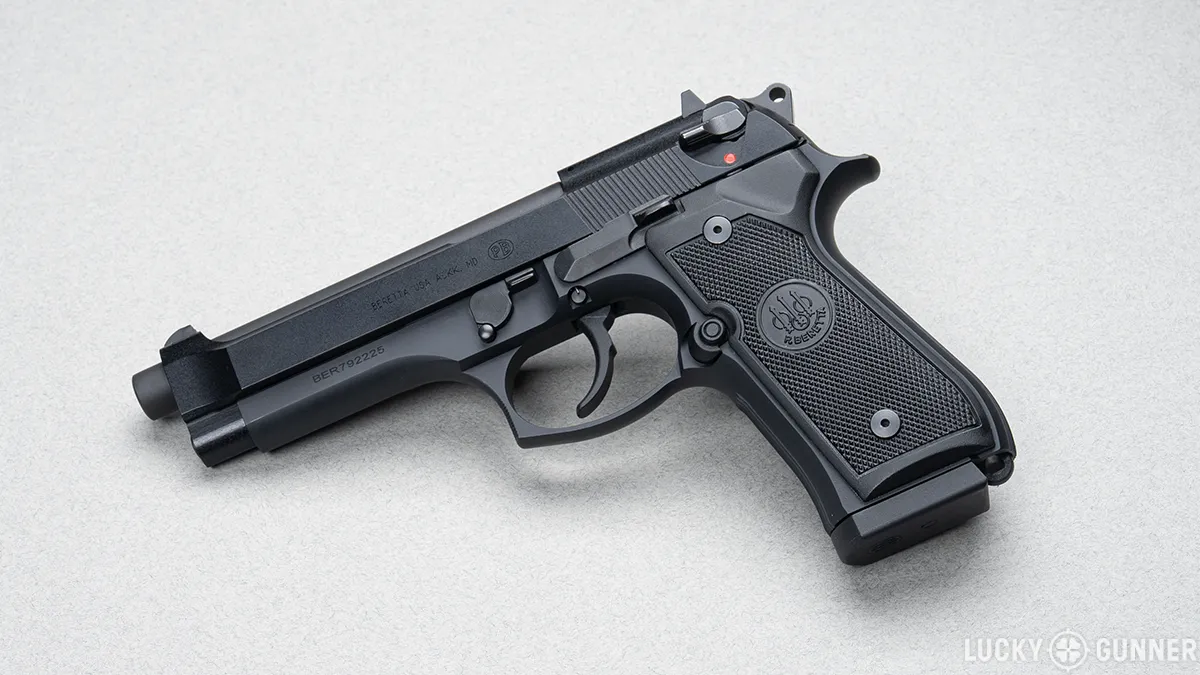
There is a threaded barrel sold separately. They don’t currently offer a kit that comes with it. They have made threaded versions of the complete 22 pistol in the past, but not right now.
As a big fan of the 92 series, I was pretty happy with how this shoots and feels in general. The flush 15-round mags are nice. The gun is only four and a half ounces lighter than with the 9mm slide and barrel so it feels very close to the real thing.
This is a completely stock 92FS frame and it ran perfectly with Mini Mags. I also tried it with my Langdon Tactical 92 frame, but the hammer spring was too light to set off the .22 primers. It’s not optic-ready and I’m not sure if the slide would cycle with an optic unless they shaved off weight somewhere. The plastic front sight on our pistol was damaged at some point. I’m not sure how, but I’m pretty sure we didn’t drop it or anything. It is compatible with standard Vertec sights.
If you love your 92 and you love it just the way it came out of the box, this could be an ideal trainer pistol.
Advantage Arms Conversion and Glock 44
Next, we have the Advantage Arms Conversion Kit and Glock 44. I’m doing these two together because the pros and cons are almost perfect opposites.
For the AA kit, reliability was not great, even using the recommended ammo and their in-house polymer optic plate. It seemed to work better with some magazines than others. There are no thumb studs for the magazine follower to help with loading. It comes with 10-round flush or 15-round extended magazines.
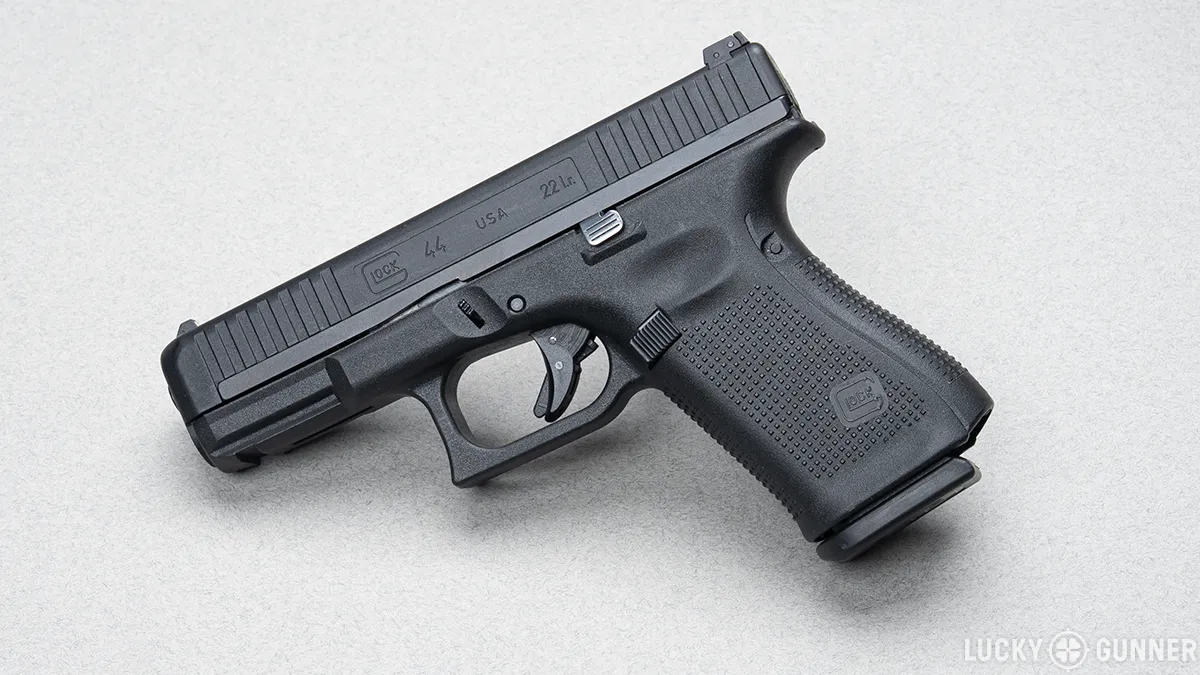
The Glock 44 was very reliable – at least our sample has been. This year, Glock released 15-round flush-fitting mags and the one we got works just as well as the old 10-rounders.
The big downside for the Glock 44 is that it’s not optic-ready while the AA kit is. That’s a huge advantage if you actually want to use this as a training analog for your centerfire Glock. And Advantage Arms makes conversion kits for most of the various double stack Glocks while the Glock 44 only comes in one size.
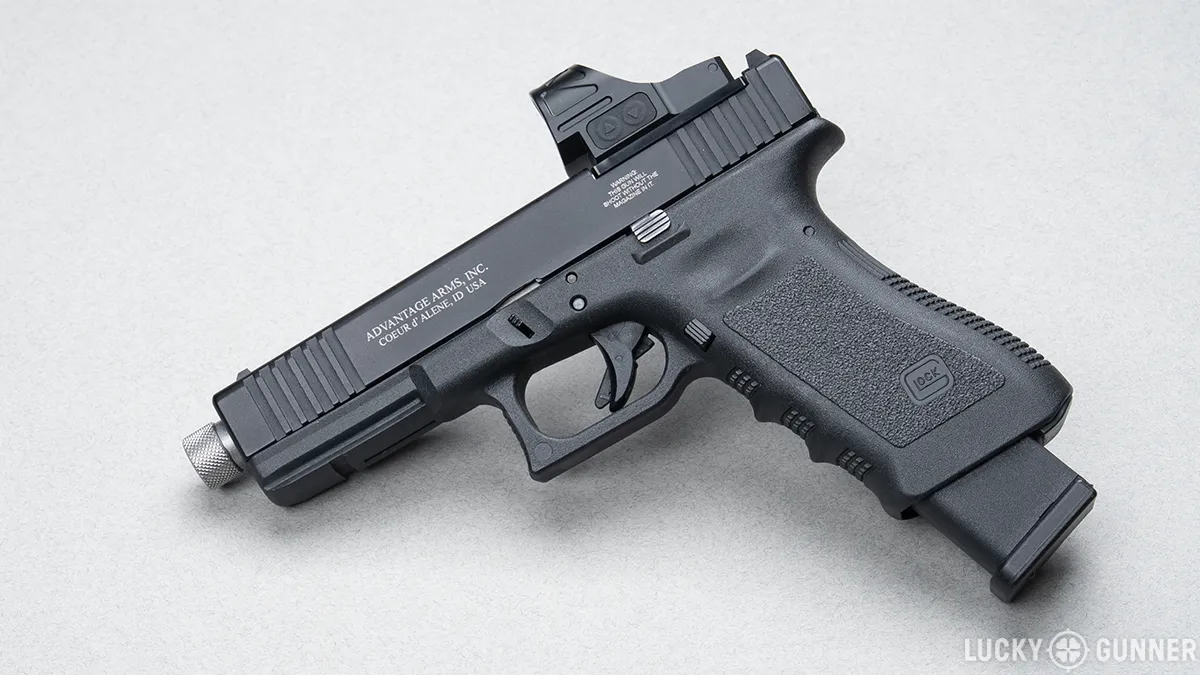
Between the two, I’d go with the Glock 44 for reliability and the Advantage Arms kit for flexibility.
Walther P22
And now the pseudo-trainers. The Walther P22 is really where this sub-category started back in 2002. It’s received a number of improvements since then, but it’s still showing its age.
It feels noticeably snappier than any of the other trainer pistols. It’s a double action/single action, but there’s no decocker. The slide-mounted safety is only a safety. The trigger is on the heavier side. Accuracy leaves something to be desired.
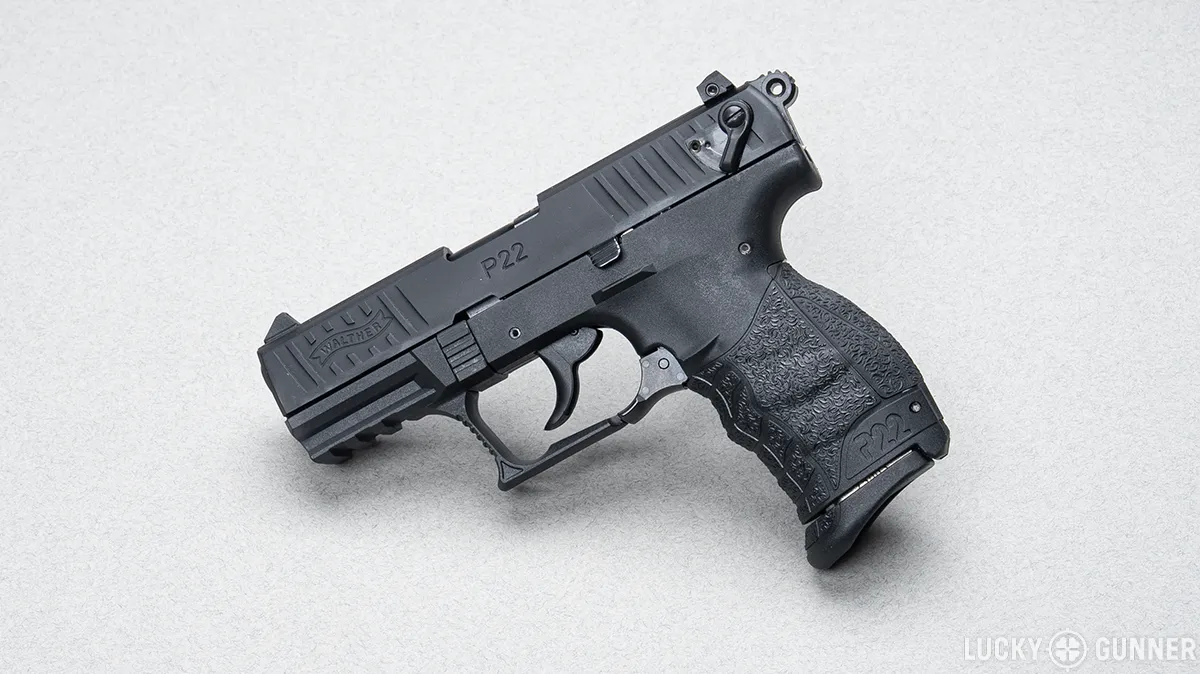
The one thing the P22 has going for it is size. It might be the smallest 22 pistol in production right now that doesn’t quite fit into the pocket pistol category. And it’s much more shootable than a pocket pistol. It’s also very affordable, although not as affordable as the KelTec, which has a lot of features you don’t get from the P22.
Smith & Wesson M&P 22 Compact
I’ve owned this Smith & Wesson M&P 22 Compact since 2013. I’ve enjoyed it. It’s excellent for a compact trainer-style pistol. It’s a more refined version of the concept than the P22. The controls and ergonomics fall right in line with the centerfire M&Ps. And as a bonus, it also has nicer magazines than most of these other guns. They’re steel bodied instead of all-polymer. And they have studs on both sides to pull down the follower while you’re loading.
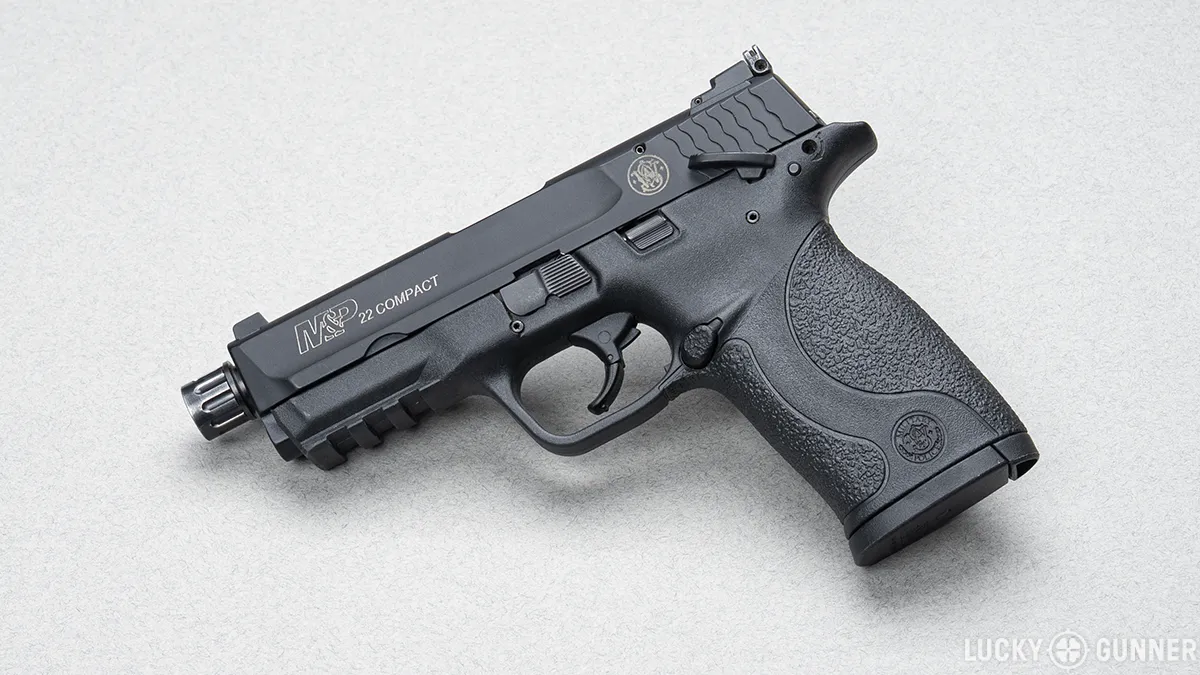
Under most circumstances, it’s probably not a great idea to carry a semi-auto .22 for self-defense. But if I was dead-set on doing that anyway, I would carry an M&P 22 Compact over any of these others. It’s light and very slim. Easy to conceal. Reliable with the right ammo. It’s got a very user-friendly manual safety design. You could do a whole lot worse for a carry gun.
But if I’m in the mood to just shoot a .22 for fun, I will usually grab my Ruger MK IV instead. The M&P Compact is not very accurate, the trigger is just okay, it’s not optic-ready, and the mags are limited to 10 rounds. And those are some of the problems the newer generation of .22 trainers has solved. So let’s look at those.
KelTec P17
The KelTec P17 is a weird gun. It looks odd. The trigger pull is two and a half pounds, which makes zero sense outside of a target pistol. The grip is narrow and long. The controls are all just abnormal enough to be annoying. It’s like if you came home and someone had shifted all of your furniture two inches to the left. You might not be able to put your finger on it right away, but you know something ain’t right.
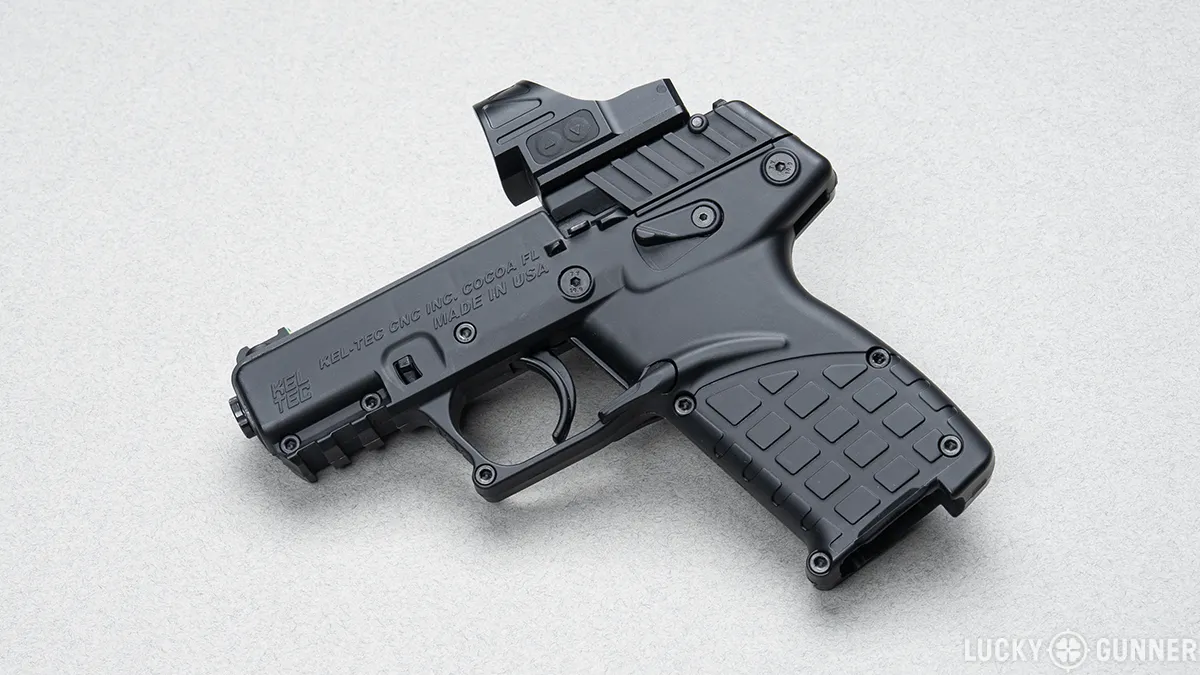
But… the MSRP is only $240 and it works surprisingly well. It’s stupid light at 14.5 ounces fully loaded. It comes with three 16-round magazines. Spare mags are only 15 bucks each. Threaded barrel is standard. Optic-ready is an option. I think the KelTec is, by far, the best value out of all of these.
Sig Sauer P322
I reviewed the Sig P322 back when it came out in 2022. I wanted to like it, but ultimately, it was a big disappointment. And since giving it another go, my opinion has not changed. I think it’s a case of good design and poor execution. There is just something cheap-feeling about this gun that I can overlook on a $200 KelTec but not on a $450 Sig.
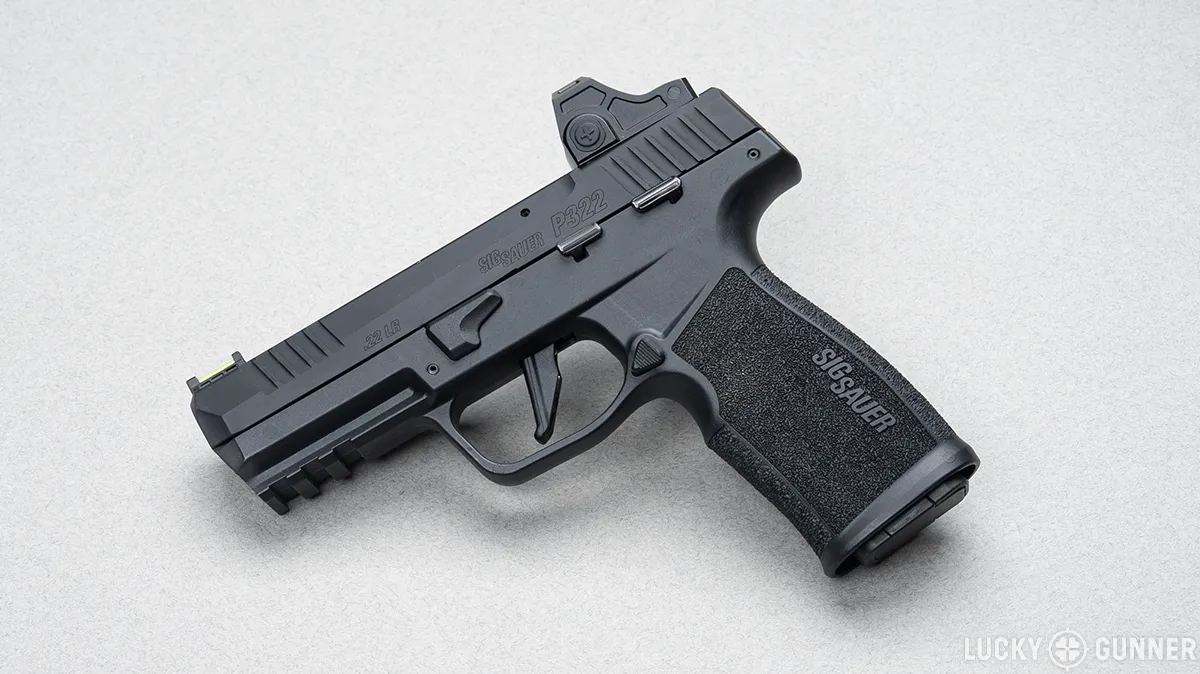
The trigger is spongy. The slide rarely locks open on an empty magazine. Even if you manually lock it open, the slightest bump will cause it to slam shut. Looking around online, this is not an uncommon issue and it gets old fast. I can’t really complain about how it actually shoots. But in a market segment that’s this competitive, it often comes down to the little things. And there are lots of little things about the P322 that give the impression Sig is cutting corners while still charging a Sig price. And I don’t care for that.
Smith & Wesson M&P 22X
The Smith & Wesson M&P 22X is kind of the opposite. The way a friend of mine put it is that if he handled these guns blindfolded, he would have assumed the Sig was a toy and the 22X was some new 9mm M&P. It feels like a real pistol.
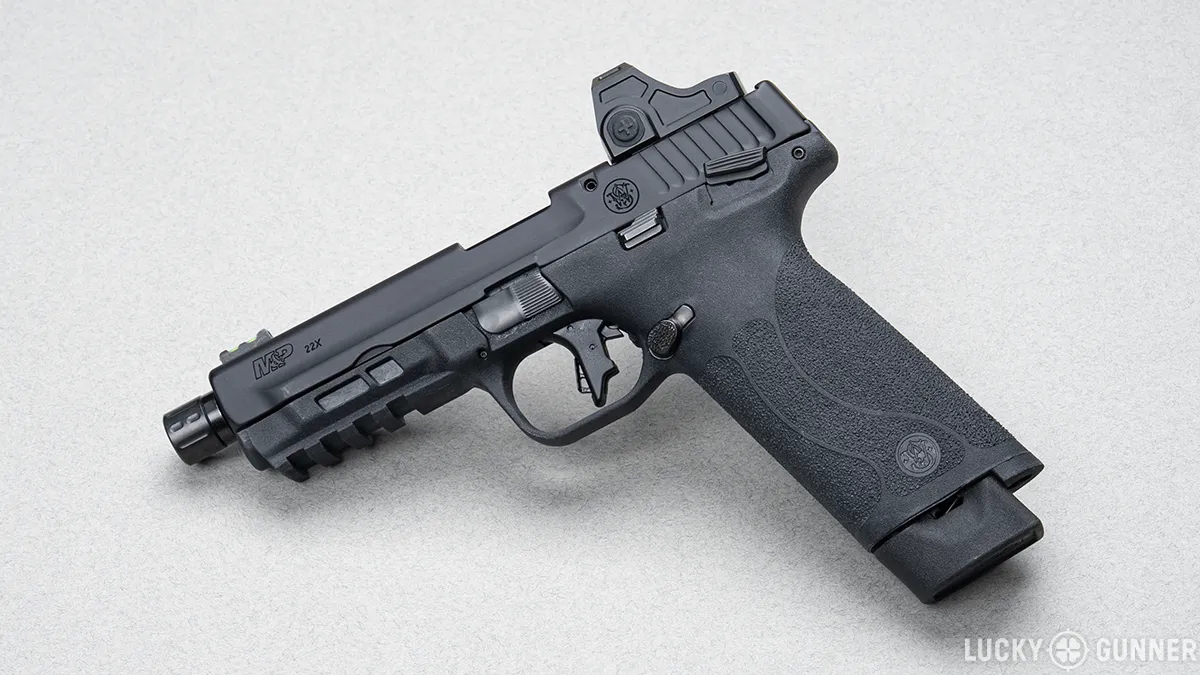
It did have one hiccup with CCI Standard Velocity during the reliability test. But, after that, when I shot it for the review I did a few weeks ago, it fired 1000 rounds with no malfunctions at all. When I ran it through the speed and practical tests a few weeks later, I did not shoot it as well as I had been. The grip is an unusual shape. It’s not bad – just different and it takes some getting used to.
If the 22X was just a little more accurate or if the price was just a little lower, it would be a strong contender for my overall favorite.
FN 502 Tactical
I’m not quite sure what to make of the FN 502 Tactical. I think I need more trigger time with it to form a real opinion. It’s a few ounces heavier than these others, which, at first, makes it seem like a more serious kind of training pistol. In a way, it feels even more “grown up” than the 22X. That might surprise some people for a gun that’s actually made by Umarex.
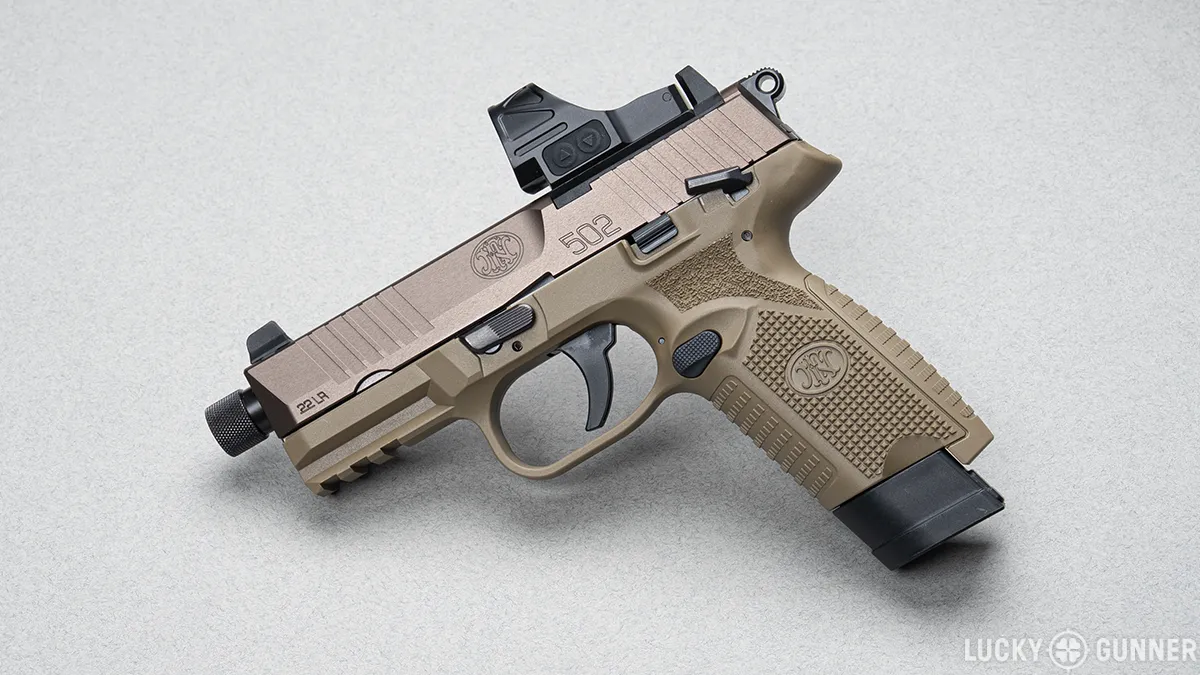
The 502 looks like it should be DA/SA gun but it’s not – it’s single action only. The trigger has almost no takeup and it breaks at a little over two pounds. Kind of odd for a trainer pistol.
It comes with adapter plates for three different optic footprints, which is a nice bonus. And it has these extra tall sights that co-witness with most optics. You get two mags – one 10-round flush and a 15-round extended.
I can’t argue with the performance. It was first in the practical test, second most accurate, and fourth in the speed test. But it’s just missing something that makes most of these others more fun to shoot. And that comes with an MSRP that’s over $100 more than any of the other 10 pistols we’re reviewing today.
Taurus TX22 Compact
The Taurus TX22 Compact is a unique option. It’s small – about the size of the P17 but with a thicker grip. That width, by the way, is the main reason I would choose the M&P over this gun if I had to carry one of these. The compact Taurus has 13-round flush-fitting mags and it takes the 16 and 21-round mags from the full-size version.
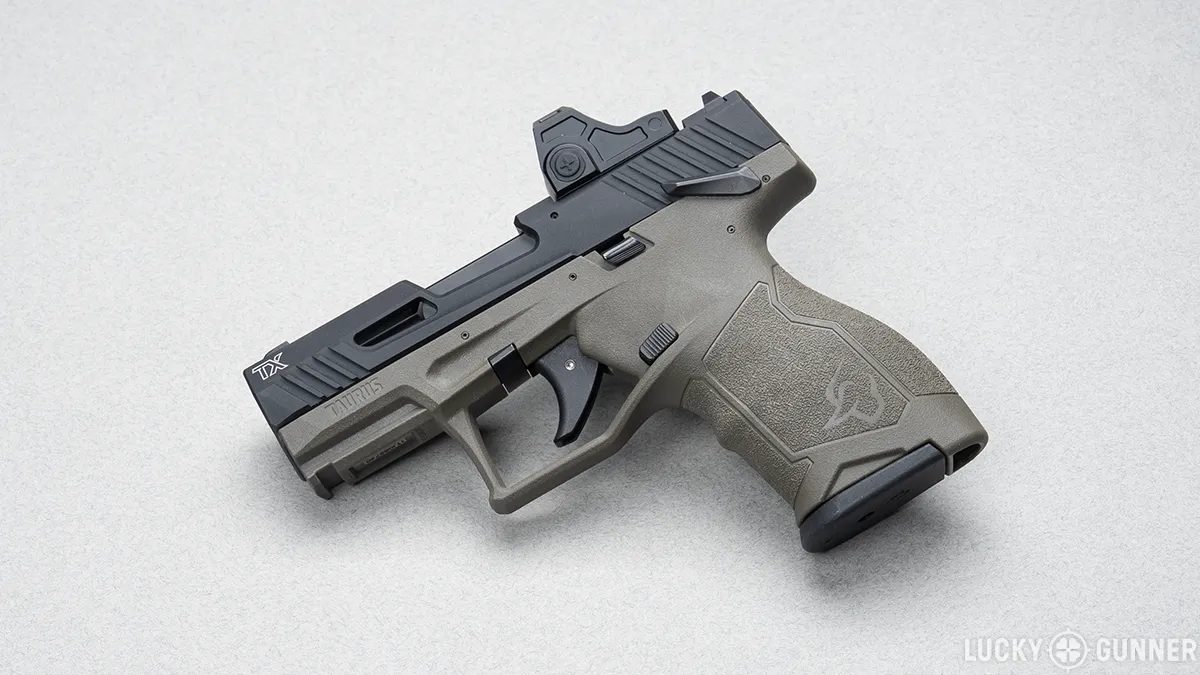
It’s got a thinner barrel profile than the full size and it’s not especially accurate. The muzzle definitely jumps around a little more. For right now, I’m going to set aside the issue with the failures to extract. Something is clearly out of spec with this particular gun. I have found no indication that it’s a common problem.
Concealed carry aside, it’s a very portable gun for something like a camping or hunting trip. The shorter barrel makes it a great suppressor host. If you like the idea of the KelTec, but you can afford to spend another $100, the TX22 Compact has far better build quality, more aftermarket support, and I found it to be a much better shooter.
Taurus TX22 TORO
And finally, we have the full size Taurus TX22 TORO. As you may have guessed by now, this is my overall top pick for best .22 trainer pistol. Now, these guns are all the rage because of the aftermarket FRT rapid-fire trigger mods. I covered that in my review of this gun from a few weeks ago. I get why people like that, but it doesn’t do much for me personally. The TX22 has plenty going for it even without the FRT.
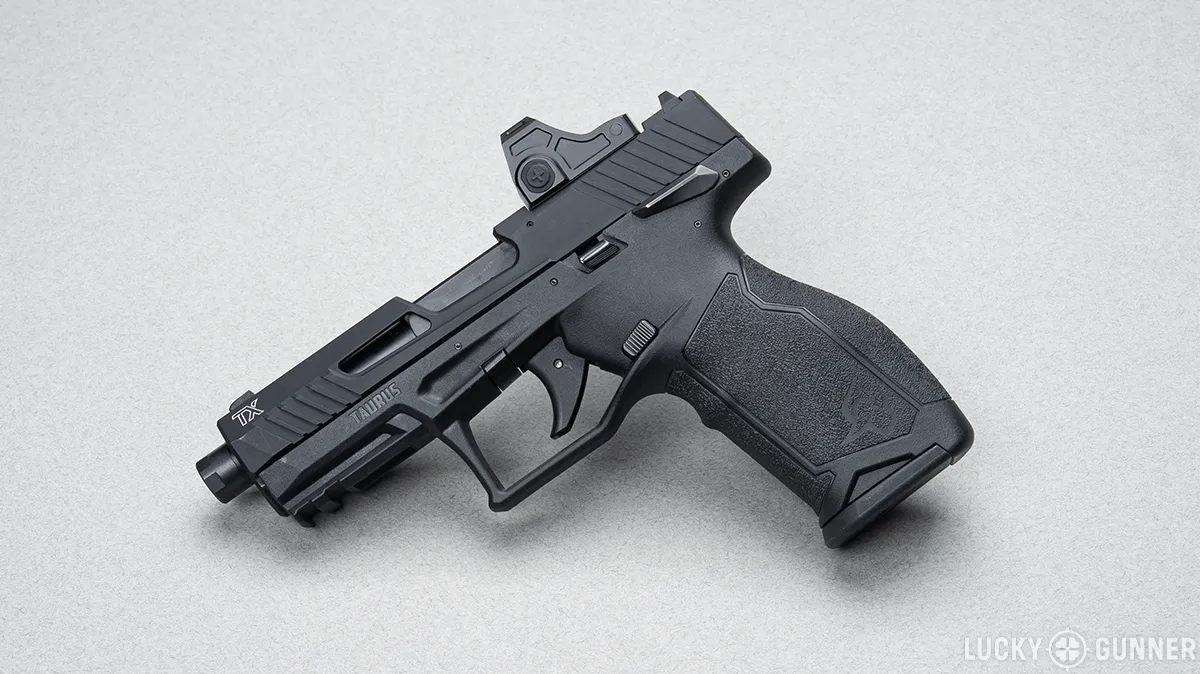
In terms of ergonomics, controls, quality, and overall feel, it resembles a full-size centerfire duty pistol more so than any of the other pseudo-trainers. And, in fact, earlier this year, Taurus launched the TX9 – a 9mm pistol based on the TX22. It might be the very first reverse .22 trainer pistol.
The TX22 TORO was the most accurate gun I tested. It placed first in the speed test and third in the practical test. It’s got a ton of aftermarket support. And like I said earlier, the little things matter for this category. You can directly attach a suppressor without an adapter. And you don’t have to remove the thread protector to take off the slide for cleaning. The manual safety is well thought-out. The trigger promotes a nice balance of safety and accuracy.
If I had to point out some issues, I’m not fond of the magazines. They feel kind of cheap, even compared to other polymer mags. And the follower studs barely stick out so the mags are a little slower to load. The backstrap is an unusual shape. It’s got this pronounced hump in the middle. It works well for me – the grip fills my hand better than a lot of these other trainers. But it might not be for everyone.
You guys know I’m not much of a crowd follower. I like weird, obscure, and old stuff. But this time, I think the crowd got it right. The TX22 is the most popular .22 trainer pistol on the market and it’s not just because of the FRT. I think it’s just plain better than the competition and it’s still one of the more affordable options.
Alright, that’s all I”ve got on .22 trainer pistols. Please head to the comments and let me know why I’m wrong. We’ve still got three more categories left in Project Rimfire – Classic Plinkers, Competition Pistols, and Small Frame Revolvers. We’ll get to those before too long, but I’m going to take a break for a while and cover some other topics. Make sure you are subscribed so you don’t miss it and the next time you need some ammo get it from us with lightning fast shipping at Lucky Gunner.


